Camping Gear
Sleeping Bags Explained: How to Pick the Right One
Learn how to choose a sleeping bag based on temperature rating, insulation type, shape, and fit. A practical beginner's guide to camping sleep systems.
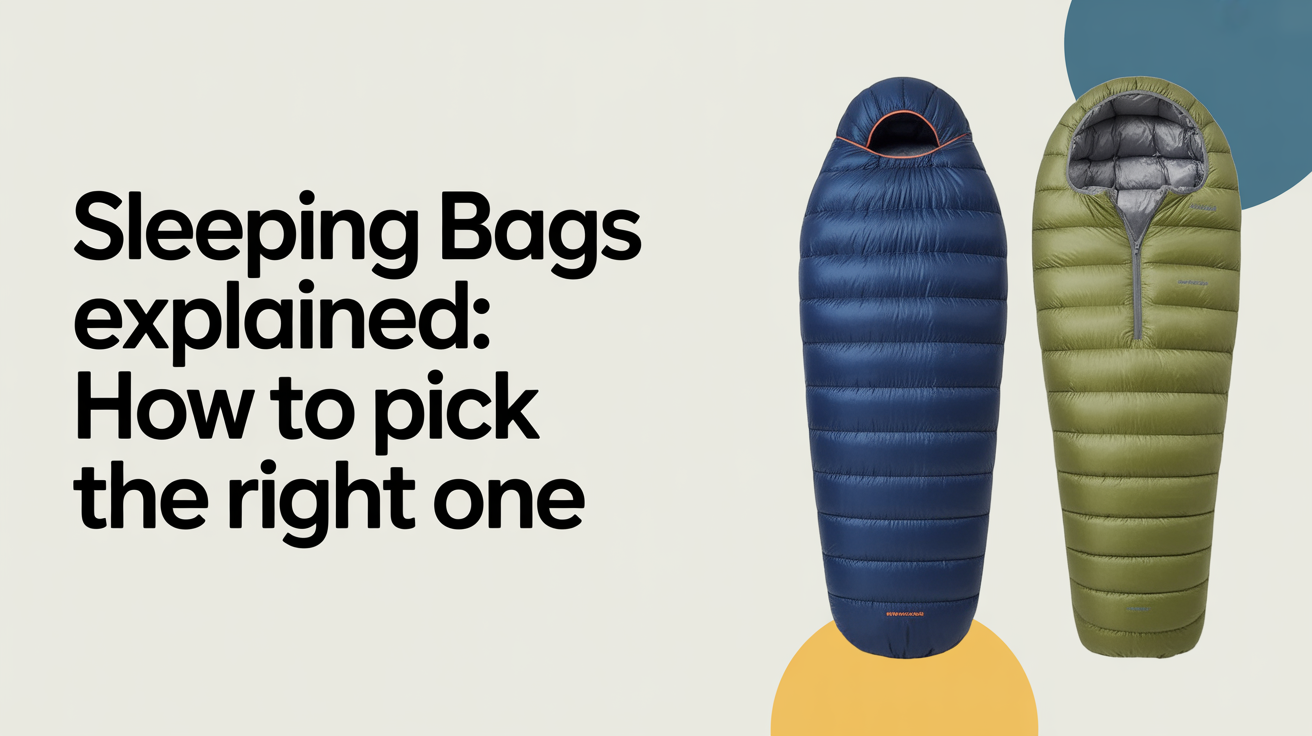
A sleeping bag is the one piece of gear that determines whether you wake up rested or miserable. Get it wrong and no amount of good tent or tasty camp food fixes a night spent shivering at 3 a.m. The good news: the decision comes down to four variables, temperature rating, insulation fill, shape, and fit. Work through them in order and you'll land on the right bag.
At a Glance
- Shop for a temperature rating roughly 10°F colder than the coldest night you realistically expect.
- Use the Comfort rating on the tag, not the Lower Limit, if you tend to sleep cold.
- Down wins on warmth-to-weight and packability; synthetic wins when the bag might get wet.
- A mummy shape is warmer per ounce than a rectangular bag because it traps less dead air.
- Your sleeping pad's R-value matters as much as the bag itself; a warm bag on a cold pad still leaves you cold.
- Measure your height and add 4 to 6 inches for footbox room before buying on length alone.
Understanding Temperature Ratings
Every sleeping bag carries a temperature rating, and almost every first-time buyer misreads it. The number printed on the tag is not the temperature at which you'll be comfortable. It's the floor, the lowest temperature at which a "standard" adult male won't die of hypothermia. The National Weather Service notes that hypothermia can set in even at temperatures well above freezing once wind, moisture, or fatigue are in the mix, which is exactly why a bag's lab rating and your real night outdoors can feel like two different numbers.
Consumer sleeping bags sold in North America and Europe now follow the EN/ISO 13537 standard, which reports three figures:
| Rating | What It Means | Best For |
|---|---|---|
| Comfort | Temperature at which a standard adult woman sleeps comfortably | The number most beginners should shop by |
| Lower Limit | Temperature at which a standard adult man sleeps comfortably | Often what's printed on the bag's label |
| Extreme | Survival threshold only, expect significant cold stress | Ignore this for recreational camping |
In practice, buy a bag rated 10°F (about 6°C) colder than the coldest night you expect. If your summer campsite dips to 45°F, shop for a 35°F bag. Metabolism, fatigue, alcohol, and humidity all push your actual warmth down from what the lab predicts.
Comfort vs. Lower Limit: Which Number to Use
If you run cold, shop by the Comfort rating. If you run hot and tend to unzip bags anyway, the Lower Limit is more relevant. Most beginners run colder than they expect outdoors, so default to Comfort.
Three-Season vs. Four-Season Ratings
For summer car camping at established sites, a 35°F to 45°F bag covers most of the contiguous U.S. and southern Canada. Fall backpacking pushes you toward 20°F. Winter mountaineering requires 0°F or colder, which is a different category of gear entirely, not where beginners should start.
Older or budget bags sometimes skip the EN/ISO testing altogether and print a single manufacturer-estimated rating instead. Treat any bag without the three-tier Comfort/Lower Limit/Extreme breakdown as optimistic by 10 to 15 degrees, and shop accordingly. A secondhand bag tagged "20°F" with no standard listed is more realistically a 30°F to 35°F bag in practice.
Down vs. Synthetic Insulation
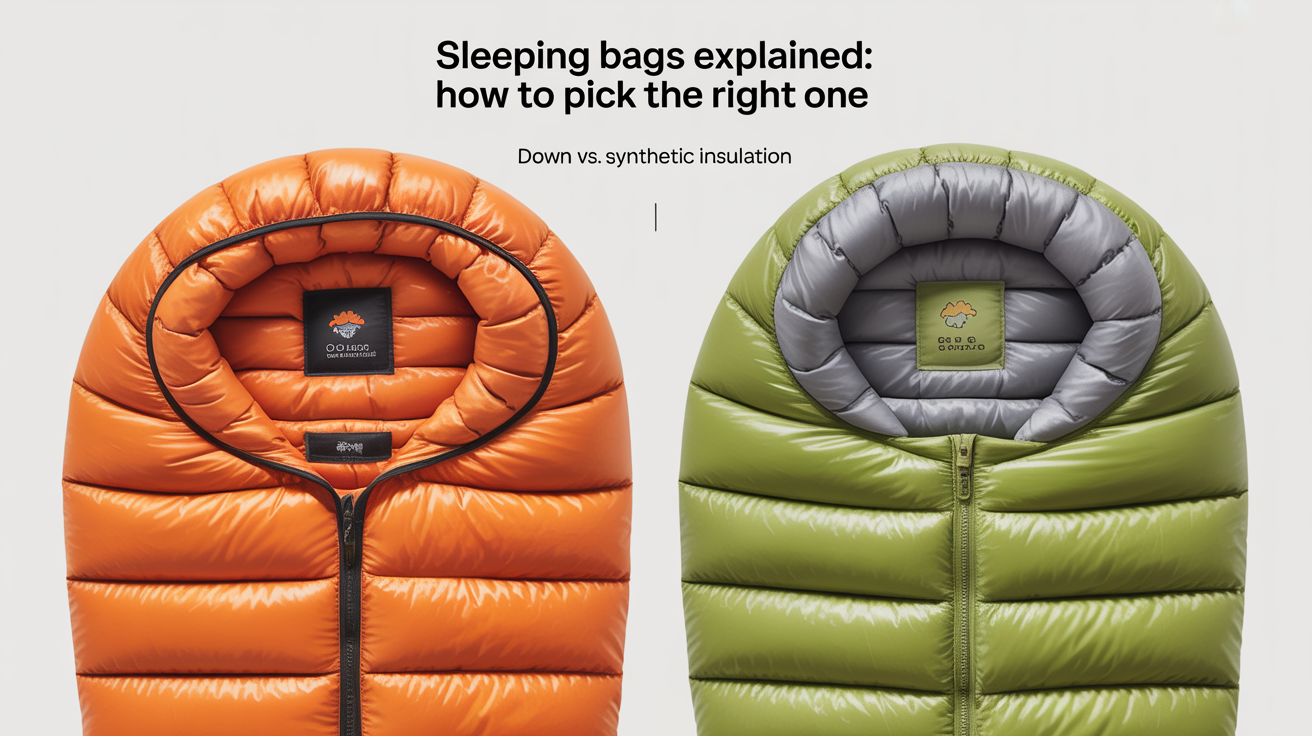
The fill inside your bag does the actual work of trapping warm air. Two materials dominate the market.
Down Fill
Down, the soft underlayer from ducks or geese, offers the best warmth-to-weight ratio available. A quality down bag compresses small, lasts decades with proper care, and feels luxurious. The tradeoff: wet down clumps and loses most of its insulating ability. A soaked down bag is nearly useless.
Most premium down bags now use hydrophobic (water-resistant) down treatments that buy you meaningful time in damp conditions before performance degrades. They're not waterproof, but they're no longer fragile in light rain.
Down is rated in "fill power", a number between roughly 550 and 900 that describes how many cubic inches one ounce of down occupies. Higher fill power means lighter weight for the same warmth, and a higher price.
Synthetic Fill
Synthetic insulation, polyester fibers engineered to mimic down's loft, retains warmth even when wet. It dries faster, is easier to wash at home, and costs less. The penalty is weight and bulk: a synthetic bag rated to the same temperature will be heavier and pack larger than its down equivalent.
For car camping, the weight penalty is irrelevant. For backpacking in reliably wet climates (Pacific Northwest, the UK, coastal routes), synthetic often makes more practical sense than down, even for experienced hikers.
Simple rule: down for dry climates and backpacking; synthetic for car camping, humid regions, or anyone on a tighter budget.
Shape: Mummy vs. Rectangular (and What's In Between)
Bag shape affects warmth, packability, and comfort, three things that pull in different directions.
Mummy Bags
A mummy bag tapers from shoulders to feet, following body contours. Less dead air space means less air your body needs to heat, so mummy bags are significantly warmer for their weight. They also compress smaller. The tradeoff is restricted movement; some people find them claustrophobic.
For backpacking or any trip where temperature is a real concern, a mummy is almost always the better choice.
Rectangular Bags
Rectangular bags lay flat, zip all the way around, and can double as a blanket. They're roomy, easy to move around in, and often cheaper. The extra air space makes them less thermally efficient, you'll need a higher fill weight to hit the same rating as a mummy bag, which adds cost and bulk.
For car camping at mild temperatures where packability doesn't matter, a rectangular bag is perfectly fine. This is also where the line between camping styles matters: the U.S. Forest Service's camping overview treats car camping as its own category precisely because weight stops being a constraint once your vehicle is parked at the site, so there's little reason to pay the packability tax of a mummy bag if you'll never carry it on your back.
Semi-Rectangular (Barrel) Bags
A middle ground: narrower at the feet than a rectangular bag but not as tapered as a mummy. These suit people who want more room than a mummy without giving up all efficiency. Many "casual camping" bags from mainstream brands fall here.
The Role of Your Sleeping Pad
This is the most overlooked variable in staying warm at night. Your sleeping bag's loft is mostly useless on the side pressed against the ground. Body weight compresses insulation to near-zero thickness, and the cold ground conducts heat away from you far faster than cold air does.
Your sleeping pad's R-value, a measure of thermal resistance, is what actually insulates you from below. A bag rated to 20°F paired with a thin foam pad rated R-1.5 will leave you cold on a 35°F night. The same bag on an R-4 pad keeps you comfortable.
| Pad R-Value | Suggested Season | Ground Temperature Handled |
|---|---|---|
| R-1 to R-2 | Summer only | Warm ground, mild nights |
| R-3 to R-4 | Three-season | Most spring, summer, fall trips |
| R-5 to R-6 | Cold three-season / shoulder winter | Near-freezing ground |
| R-6.5 and up | Winter | Frozen or snow-covered ground |
For three-season camping, aim for a pad with an R-value of at least R-3 to R-4. For winter, R-5 or higher. The pad and the bag function as a system; under-investing in one undermines the other. If you're stacking two pads to boost your effective R-value (a common budget move), the values add roughly, so an R-2 foam pad under an R-2 inflatable gets you close to R-4.
For more on pad selection, see our guide on whether you need a sleeping pad and how to pick one.
Fit and Sizing
A bag that's too large has excess air space your body has to heat. A bag that's too small compresses the insulation on top of you, reducing warmth and cutting off circulation. Neither extreme is comfortable.
Length
Most bags come in regular (fits up to 6') and long (fits up to 6'6"). Some brands offer short versions for smaller adults and children. Measure your height and leave 4 to 6 inches of extra length at the feet, enough to wiggle your toes without bottoming out against the footbox.
Shoulder and Hip Girth
Mummy bags in particular vary in how roomy their cut is. Brands targeting backpackers often run narrow to save weight; brands targeting general campers cut a bit roomier. If you're broad-shouldered or prefer more movement, check the manufacturer's girth specs rather than relying on the length alone.
Women's-Specific Bags
Women's bags are shorter, narrower at the shoulders, wider at the hips, and carry extra insulation in the footbox and torso, areas where women tend to lose heat more quickly. If a unisex bag has ever left your feet cold while your torso overheated, a women's bag is worth trying.
Putting It Together
Before you buy, nail down these four points:
- What's the coldest temperature you'll realistically camp in? Subtract 10°F and shop for that rating, using the Comfort figure if it's listed.
- Where and how will you camp? Car camping tolerates heavier synthetic fills. Backpacking rewards lighter down.
- What R-value is your sleeping pad? If you don't have one yet, pick one before finalizing the bag. See essential camping gear for beginners for the full kit list.
- Does the fit match your body? Check length and girth specs, not just the temperature number.
Pair the right bag with a properly rated pad, wear a clean layer of base layer clothing to bed, and keep your sleeping bag dry, those three habits will do more for your camp sleep than spending twice as much on a premium bag.
For shelter context, see our guide on how to choose a tent for camping.
Frequently Asked Questions
What temperature rating should a beginner get?
For three-season camping across most of North America, a 20°F to 35°F bag covers the widest range of conditions without being overbuilt for summer. If you're certain you'll only camp in summer at low elevation, a 40°F bag is enough, but the versatility of a 20°F bag for only a modest extra cost is often worth it.
Is a higher fill power always better?
Higher fill power means the same warmth with less weight and bulk. It does not mean a 900-fill bag is warmer than a 550-fill bag, only that a 900-fill bag rated to 20°F will pack smaller than a 550-fill bag rated to the same temperature. For car camping where weight is irrelevant, fill power matters very little.
Can I use a sleeping bag liner instead of buying a warmer bag?
A quality fleece or silk liner adds 5°F to 15°F of warmth and extends the life of your bag. It's a legitimate option if you already own a bag and want to push it into cooler conditions. It's not a substitute for buying the right bag in the first place, a liner won't rescue a summer bag on a cold fall night.
How should I store my sleeping bag?
Never store a sleeping bag compressed in its stuff sack long-term. Compression fatigues the insulation over months, permanently reducing loft. Store it loosely in a large cotton or mesh storage sack, or hang it in a closet. The stuff sack is for transport, not storage.
Do I need to wash my sleeping bag before using it the first time?
No. Wash it when it starts to smell or when the insulation feels clumped. Down bags require a front-loading washer (no agitator) and low heat with down-specific soap. Synthetic bags are more forgiving. Follow the manufacturer's label, overwashing degrades the DWR treatment on the shell fabric.
Can two sleeping bags be combined for extra warmth?
Yes, to a point. Sleeping in a second bag on top of your regular bag, or nesting a lighter bag inside a roomier one, can add a real margin of warmth on an unexpectedly cold night. It's a reasonable backup plan if you already own a spare bag, but it's bulkier and heavier than simply buying one bag rated for the coldest conditions you expect, and it works best as an occasional fix rather than your regular setup.
What actually causes cold spots inside a sleeping bag?
Compressed or shifted insulation is the usual culprit, especially in bags with sewn-through baffles where fill can migrate to one side after repeated compression in a stuff sack. Zippers and draft tubes are the other common leak point: a draft tube that's twisted or a zipper pulled down even slightly lets warm air escape all night. Check both before assuming you simply bought the wrong rating.