Camping Gear
Essential Camping Gear for Beginners (and What to Skip)
A practical beginner camping gear guide covering what to buy, what to borrow, and what to skip entirely on your first few trips.
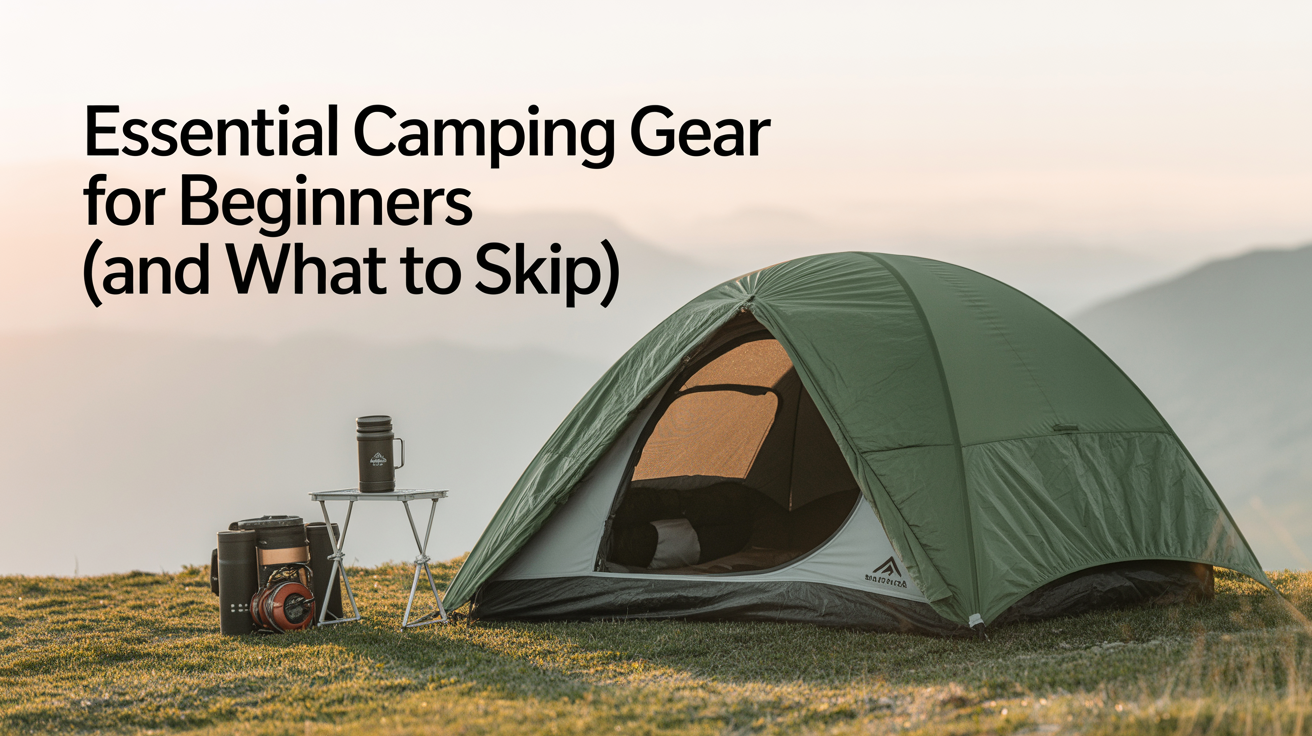
Before your first trip, the gear aisle at an outdoor shop can feel overwhelming. There are dozens of products marketed as must-haves, with prices ranging from twenty dollars to several hundred. Most of it is unnecessary for a beginner. A few items, though, will genuinely make or break your night.
This guide cuts through the noise. It covers what you actually need, what you can skip for now, and why borrowing or renting first is often the smartest move before spending anything.
The Core Essentials: What You Actually Need
These are the items that affect your comfort, safety, and sleep. Without them, camping becomes genuinely miserable rather than just mildly uncomfortable.
Shelter: Tent
A tent is non-negotiable for most camping scenarios. For beginners, a three-season freestanding tent in the "1-2 person" or "2-3 person" range covers nearly every situation, car camping, campgrounds, warm-weather backpacking.
Look for:
- A rainfly that covers the full body of the tent (not just the top)
- A bathtub floor (the floor material wraps up several inches on the sides to block water)
- A vestibule or small covered entry area to keep muddy boots outside
Avoid ultra-light tents with complex setups on your first purchase. They cost more and take practice to pitch quickly.
Sleep System: Sleeping Bag
Your sleeping bag's most important spec is its temperature rating. Most beginners underestimate how cold nights get, even in summer. A bag rated to 20°F (about -7°C) handles most three-season camping and gives you real margin on cold nights.
Down fill compresses smaller and lasts longer. Synthetic fill stays warm when wet, costs less, and is easier to care for. For beginners camping at established campgrounds where gear usually stays dry, either works fine.
For a deeper look at how to read temperature ratings and choose fill type, see Sleeping Bags Explained: How to Pick the Right One.
Sleeping Pad: The Item Beginners Most Often Skip
This is where most new campers make their biggest gear mistake. A sleeping bag alone is not enough, you will be cold even in a warm bag if you sleep directly on the ground.
Here's why: your body compresses the insulation beneath you, removing its ability to trap air. Meanwhile, the ground pulls heat out of your body. A sleeping pad solves both problems. It insulates from below and cushions the surface.
Sleeping pads are rated by R-value, which measures resistance to heat transfer. For three-season camping, an R-value of 2 to 4 works well. Anything below 2 is a summer-only pad and will leave you cold on any night below 50°F.
Types to know:
- Foam pads: cheap, durable, never deflate, R-values around 2-3 depending on thickness
- Self-inflating pads: open-cell foam that expands when you open the valve; R-values of 3-5
- Air pads: lightest and most packable; no foam inside, rely entirely on air; can puncture
For car camping, a self-inflating pad is practical and comfortable. For anyone curious about the deeper tradeoffs, Do You Need a Sleeping Pad? A Beginner's Guide covers R-values in detail.
Headlamp
A headlamp keeps both hands free, which matters more than you'd expect at a campsite. You're setting up stakes, starting a fire, cooking, or finding the bathroom at 2am, a handheld flashlight is genuinely inconvenient for all of it.
Basic features that matter:
- At least 150 lumens for decent light at a campsite
- A red-light mode (preserves night vision and doesn't wake tentmates)
- A runtime of 20 or more hours on the main setting
Skip the ultra-bright 1000-lumen headlamps for now, you don't need them, and they eat batteries faster.
Camp Stove and Fuel
If you plan to eat anything warm, a canister stove is the easiest starting point. A small burner screws onto a fuel canister and boils water in about three minutes. That covers coffee, instant oatmeal, ramen, and freeze-dried meals. It's compact, reliable, and simple.
For car camping where weight doesn't matter, a two-burner propane stove gives you more cooking flexibility, you can do real meals rather than just boiling water. These run on the same green propane canisters you'd use for a camp lantern.
Bring more fuel than you think you need. Altitude and cold temperatures reduce canister efficiency significantly.
Cooler
If you're car camping and bringing fresh food or drinks, a hard-sided cooler works best. Ice retention matters more than size for most beginners. A cooler that holds ice for two or three days lets you plan real meals without worrying about food safety.
Key tips:
- Pre-chill the cooler with ice an hour before loading
- Pack block ice under food, cubed ice around drinks
- Don't open it unless you need to
You don't need a premium cooler on your first trip. A mid-range hard-sided cooler does fine at a campground where you're not far from a restock.
Camp Chairs
Camping without somewhere to sit gets old quickly. At campgrounds with picnic tables, chairs matter less. For most sites, a lightweight folding chair you can leave at the site is one of the small things that make the whole trip feel like a real break.
Nice-to-Have: Add These Later
These items improve quality of life but won't ruin your trip if you skip them on your first few outings.
Camp Lantern
A headlamp covers basic lighting. A lantern illuminates a wider area for evening meals or group hanging. Rechargeable LED lanterns are the current standard, no batteries to buy, no fuel to carry. It's a good purchase once you've been out a few times and know how you use camp lighting.
Camp Kitchen Kit
A dedicated camp cookware set, a French press, a cutting board, a collapsible dish basin. These all improve the cooking experience but aren't necessary. Many beginners do their first few trips with a single lightweight pot and a spork.
Trekking Poles
If you plan to hike trails with significant elevation, trekking poles reduce knee stress on descents and help with balance on loose terrain. They're not essential for flat trails or around the campsite. If you're only doing beginner hikes, skip them for now.
Camp Shower
Solar camp showers are cheap and genuinely useful on multi-day trips in warm weather. For a two-night weekend trip, most people don't bother.
Hammock
Hammocks need two trees the right distance apart and work poorly in treeless sites. They're not a sleep system replacement (you'll still need a sleeping pad or underquilt) and are more of a luxury add-on for lounging.
What to Skip Entirely (at First)
Some products are heavily marketed to beginners but rarely deliver on the premise.
Multi-Tool or Camp "Kit" Sets
Pre-packaged beginner kits usually include a compass, whistle, fire starter, emergency blanket, and paracord. Some of that is useful, but bundled together in low-quality versions, it's often junk. If you want a fire starter, buy one good one. Same for a compass.
Elaborate Lighting Setups
String lights for the campsite are pleasant, but buying them before you've been camping is optimistic. See what you actually use first.
Portable Power Stations
For weekend car camping at a modern campground, you can charge your phone in the car. Large portable power stations cost hundreds of dollars and weigh a lot, a reasonable purchase for people who camp regularly with electronics, not for beginners.
Expensive Cookware Sets
Cast iron is heavy and slow. Ultralight titanium sets cost as much as a sleeping bag. A single aluminum pot and a lightweight pan are enough to start.
Borrow or Rent First: The Practical Advice Most Guides Skip
The biggest gear mistake beginners make is buying everything before their first trip.
Here's the problem: you don't know your preferences yet. You might buy a tent rated for three people, discover that you mostly camp solo, and wish you'd gone smaller. You might buy an elaborate stove setup and realize you prefer the simplicity of pre-made meals at the campsite.
What to do instead:
-
Borrow from friends or family first. Most outdoor-focused people have gear sitting unused. A borrowed sleeping bag and tent cost nothing and tell you exactly what you do and don't want.
-
Rent from outdoor retailers. REI and many independent outdoor shops rent tents, sleeping bags, and sleeping pads. A weekend rental typically costs $20-40 per item. After two rental trips, you'll have strong opinions about what to buy and in what order.
-
Start with consumables, not gear. Spend on food, fuel, and campsite fees first. The gear conversation makes more sense once you know how much you actually like camping.
The order that makes sense for most beginners: sleeping pad first (biggest impact on sleep quality), sleeping bag second, tent third. For a tent pick, How to Choose a Tent for Camping covers the specs that actually matter.
Quick Reference: Essential Camping Equipment
| Item | Why It Matters | Priority |
|---|---|---|
| Tent | Shelter from rain, wind, and bugs | Essential |
| Sleeping bag | Core sleep warmth | Essential |
| Sleeping pad | Insulates from ground; most skipped | Essential |
| Headlamp | Hands-free light at night | Essential |
| Camp stove + fuel | Hot food and drinks | Essential (if cooking) |
| Cooler | Food safety on multi-day trips | Essential (car camping) |
| Camp chair | Comfortable sitting at site | Recommended |
| Camp lantern | Ambient light for group evenings | Nice-to-have |
| Trekking poles | Knee and balance support on trails | Later |
| Camp shower | Hygiene on longer trips | Later |
| Hammock | Lounging where trees cooperate | Optional |
| Bundled "kit" sets | Usually low quality | Skip |
| Portable power station | Heavy; not needed at modern sites | Skip (for now) |
Frequently Asked Questions
How much should a beginner expect to spend on camping gear?
A functional beginner setup, sleeping bag, sleeping pad, and a basic tent, runs $150-300 if you buy mid-range options on sale or gently used. That's enough for comfortable three-season camping. You don't need to spend more than that to have a good experience. Sleeping pad and sleeping bag give you the most return per dollar; save on the tent if you're cutting costs.
Can I rent camping gear instead of buying it?
Yes, and it's often the right call for your first few trips. Many outdoor retailers rent tents, sleeping bags, and sleeping pads at reasonable daily or weekend rates. Renting before buying lets you test real gear in real conditions before committing to a purchase.
Is a sleeping pad really necessary?
Yes. This is the item beginners most often treat as optional, and it consistently leads to bad sleep and cold nights. Even at 60°F, the ground draws warmth away from your body faster than the air around you. A sleeping pad rated R-3 or higher makes a larger difference to sleep quality than almost any other single item.
What's the difference between a 2-person and 3-person tent?
Tent capacity ratings are optimistic. Two adults in a "2-person" tent have no room for gear and very little personal space. If you're camping with a partner, size up to a 3-person tent. If you're camping solo with a dog or a lot of gear, a 2-person tent gives you that extra room. Always check the floor dimensions, not just the capacity number.
Do I need a camp stove, or can I just use a campfire?
Many campgrounds restrict open fires during dry conditions, and some ban them entirely. A camp stove gives you a reliable way to cook regardless of fire restrictions. It's also faster and easier than cooking over a fire. A basic canister stove is inexpensive and takes five minutes to learn. If you plan on eating anything hot, it's worth having.