Camping Gear
Do You Need a Sleeping Pad? A Beginner's Guide
Yes, you need a sleeping pad for camping. Learn why it's about warmth, not just comfort, plus how to choose by R-value, type, and season.
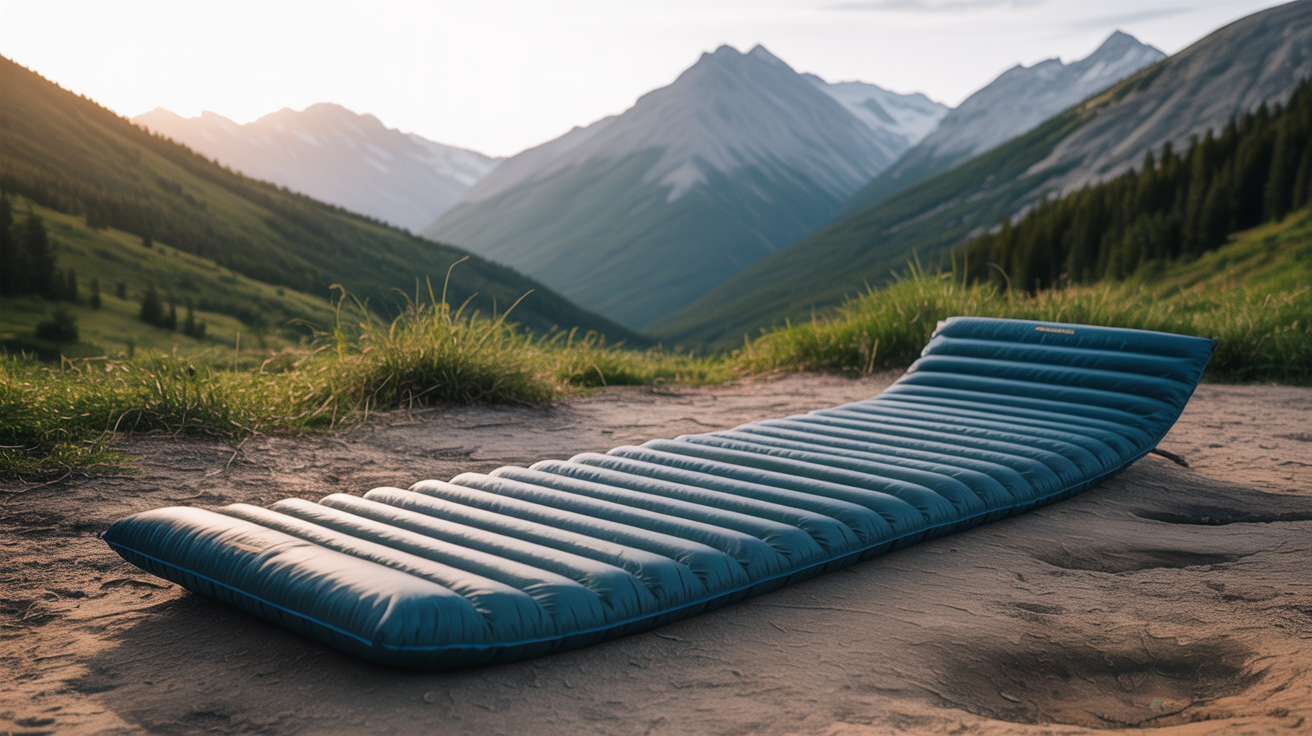
Yes, you need a sleeping pad. Not because the ground is hard (though it is), but because the ground is cold. Even on a warm summer night, the earth draws heat away from your body faster than still air does. A sleeping bag insulates you from above; a sleeping pad insulates you from below. Skip the pad and you'll sleep cold even if the air temperature feels mild.
This guide explains the thermal science behind pads, walks through the three main types, and gives you a practical framework for matching pad choice to the conditions you're camping in.
Why a Sleeping Pad Is Mostly About Warmth
Most beginners assume a sleeping pad is just a cushion. Comfort is part of it, but warmth is the main job.
Here's the physics: your sleeping bag works by trapping air in its fill (down or synthetic). When you lie on it, the fill on the bottom gets compressed flat. Compressed fill has almost no insulating ability. So the bottom of your bag is essentially doing nothing to keep you warm against the ground.
The ground itself acts as a heat sink. Soil and rock have high thermal conductivity. They absorb heat from your body at a steady rate, and no matter how warm the night air is, prolonged contact with the ground will eventually make you cold. In shoulder-season or winter camping, this can turn dangerous quickly.
A sleeping pad interrupts that heat transfer. It creates a layer of trapped air (or foam) between you and the ground, slowing the rate at which the earth can pull warmth from your body.
What R-Value Means
R-value is the standard measurement of a material's resistance to heat flow. A higher R-value means more resistance, which means more warmth. Every sleeping pad on the market now uses a standardized ASTM F3340 test, so you can compare R-values across brands directly.
R-value is additive. If you stack a closed-cell foam pad (R-2) under an air pad (R-3), you get roughly R-5 combined. This layering trick is popular among backpackers who want four-season capability without buying the heaviest single pad.
The Three Types of Sleeping Pads
Closed-Cell Foam Pads
Closed-cell foam pads are made from dense foam with tiny closed air bubbles throughout. They don't inflate, they can't puncture, and they work when wet. A basic foam pad runs $20 to $40 and lasts years of hard use.
The tradeoff is bulk. They don't compress much, so most backpackers strap them to the outside of a pack. For car camping, this isn't an issue at all.
Foam pads typically have R-values between 1.5 and 4, depending on thickness. They're the most beginner-friendly choice: nothing to inflate, nothing to leak, nothing to repair.
Self-Inflating Pads
Self-inflating pads combine open-cell foam with an airtight shell. You open the valve, the foam expands and draws in air, then you add a few breaths to firm it up. They pack smaller than closed-cell foam and feel more like a mattress.
R-values run from about 2 to 5. They're slightly heavier than air pads at the same insulation level, but they're more puncture-resistant and easier to use.
Air Pads
Air pads are inflated entirely by breath (or a small pump sack). They pack down to roughly the size of a water bottle. High-end models use reflective materials or down fill inside the air chambers to push R-values above 5.
The catch: a puncture deflates your pad overnight. Carry a patch kit. Air pads also require a few minutes to inflate and some practice to get the firmness right.
For backpacking where weight and pack size matter most, air pads dominate. For car camping where you're hauling gear from a parking lot, the convenience advantage shrinks.
Matching R-Value to Season and Temperature
The table below maps R-value ranges to typical use cases. These are starting points, not hard rules. If you sleep cold or you're camping at altitude where temps drop faster, size up.
| R-Value | Season | Typical Low Temperature |
|---|---|---|
| R-1 to R-2 | Summer only | Above 50°F (10°C) |
| R-2 to R-3 | Three-season (spring/summer/fall) | 30°F to 50°F (-1°C to 10°C) |
| R-4 to R-5 | Cold-weather / early winter | 15°F to 30°F (-9°C to -1°C) |
| R-5 and above | Winter / snow camping | Below 15°F (-9°C) |
A few notes on using this table:
Ground temperature matters more than air temperature. The ground stays cold longer than the air warms up. A night that hits a low of 45°F still has cold soil underneath your campsite.
Altitude adds a penalty. At elevation, temps can drop 20 to 30 degrees overnight even in midsummer. If you're camping in the mountains, treat the pad like a three-season environment regardless of the calendar month.
Dampness makes everything colder. Wet ground or high humidity increases heat loss. In those conditions, lean toward a higher R-value than the table suggests.
How to Add R-Value Without Buying a New Pad
If you already own a foam sit pad from a thrift store or a budget foam roll, you can place it under your main pad to boost insulation. The combined R-values stack. This works especially well for cold-weather camping on a budget: a cheap foam pad under a three-season air pad can cover you into winter territory.
Choosing the Right Pad for Your First Trip
For your first car camping trip in summer, almost any pad works. A basic foam roll will do the job and costs almost nothing. You'll sleep fine.
For backpacking or shoulder-season camping, think more carefully. The weight and pack size of a foam pad become real constraints on a multi-day trip. A self-inflating pad around R-3 is a solid all-rounder that covers most three-season conditions without the puncture risk of a pure air pad.
Check the essential camping gear for beginners and what to skip if you're still building out the rest of your kit. A sleeping pad belongs near the top of that list, alongside a tent and sleeping bag.
Your tent matters here too. A well-chosen tent traps warmer air inside, which reduces (but does not eliminate) how much work your pad needs to do on cold nights.
And the pad works as a system with your sleeping bag. If you haven't picked a bag yet, see the guide on how to choose a sleeping bag. The short version: bag and pad R-values need to be matched to the same temperature range or one will outperform the other pointlessly.
Frequently Asked Questions
Can I use an air mattress instead of a sleeping pad?
You can, for car camping in mild weather. Air mattresses have very low R-values (often below 1) because the large air chambers allow convective heat loss as air circulates inside. In cold conditions, a thick air mattress can actually feel colder than thin foam. If the temperature stays well above 50°F, it's fine. Below that, add a foam pad underneath or switch to a proper sleeping pad.
Do I need a sleeping pad if I'm using a hammock?
Yes. Hammocks expose you to cold air on all sides, not just below. You lose heat through the hammock fabric just as fast as you would through a compressed sleeping bag on the ground. The solution is an underquilt (insulation that hangs beneath the hammock) or a sleeping pad placed inside the hammock. Most hammock-specific pads are sized and shaped for the curved interior.
How thick should a sleeping pad be?
Thickness affects comfort but not necessarily insulation. R-value is the relevant spec for warmth. A 1-inch closed-cell foam pad with a high density can outperform a 3-inch air pad that has a low R-value. Focus on R-value for the temperatures you'll face, then consider thickness as a secondary comfort preference.
Is a sleeping pad worth it for just one night of camping?
Yes. You'll notice the difference on the first night. Cold ground wakes people up in the early morning hours when temperatures are at their lowest, even in summer. A single uncomfortable night isn't a reason to skip a $25 foam pad that lasts years.
What R-value is good for summer camping?
For summer camping with lows above 50°F, an R-value of 1 to 2 is sufficient. A basic closed-cell foam pad handles this range comfortably. If you're camping at altitude or in the mountains where summer nights are colder, aim for R-2 to R-3 to stay safe.