Campsite Skills
Leave No Trace: How to Camp Responsibly
Learn the seven Leave No Trace principles in plain terms, with practical examples for beginner campers who want to protect wild places.
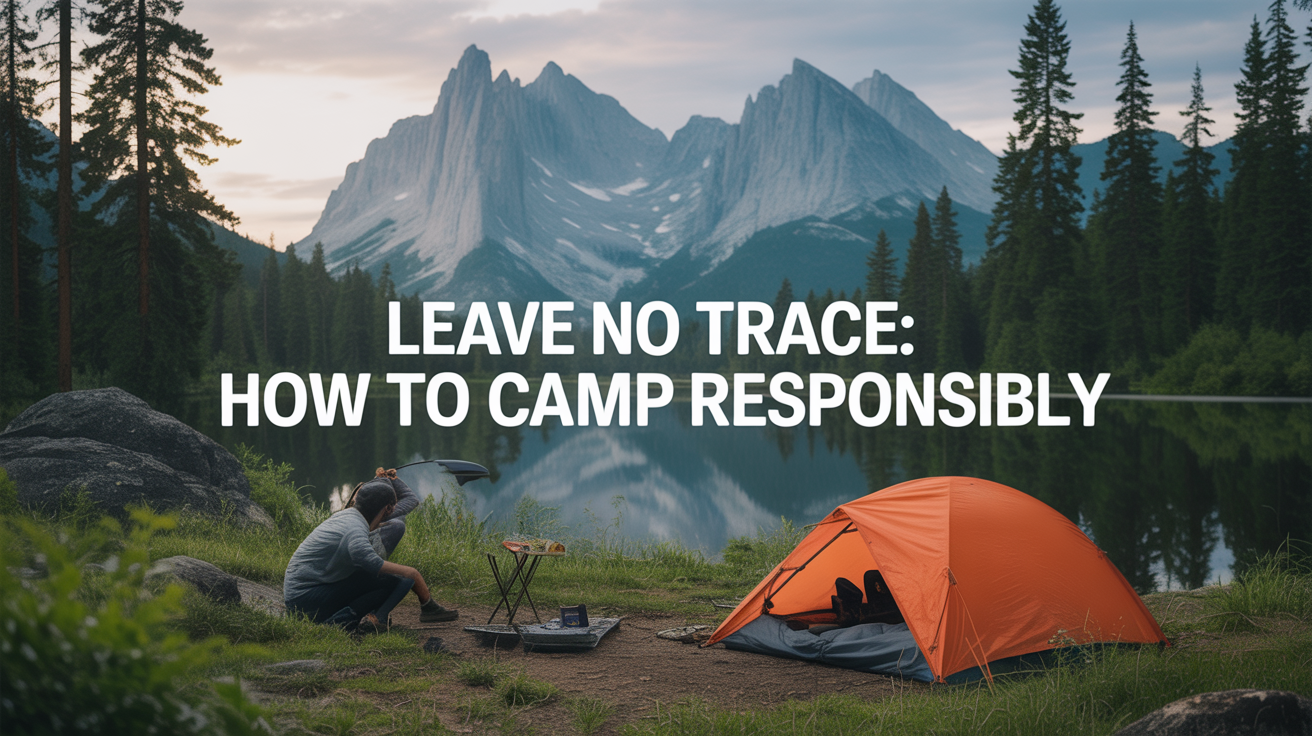
Leave no trace camping boils down to one idea: when you leave a campsite, it should look the same as when you arrived. That means no litter, no scorched ground, no shortcuts that trample vegetation, and no noise that ruins the experience for the next person or the wildlife nearby.
There are seven recognized principles that cover the main ways campers damage wild places. This guide walks through each one in plain terms, with specifics you can use on your next trip.
The Seven Principles, Explained for Beginners
1. Plan ahead and prepare
Most camping damage happens because people weren't ready. They didn't bring trash bags, so they left food wrappers. They didn't check fire regulations, so they built a fire where one wasn't allowed. A little preparation prevents most problems.
Before you go: check the rules for the specific area (fire bans, permit requirements, group size limits), pack a bag for your trash, and know whether the water sources are drinkable so you bring a filter instead of tossing plastic bottles.
2. Travel and camp on durable surfaces
Stick to established trails and existing campsites. When you walk off-trail repeatedly, you create new worn paths and kill the plants that hold soil in place. On marked trails, walk single file and stay on the path even when it's muddy.
At camp, set up on bare dirt, rock, gravel, or dry grass rather than on fragile plants. If you're in a site with no established fire ring, look for a spot that's already been used rather than clearing a fresh one. This is easier at a well-chosen campsite where flat, durable ground is obvious.
3. Dispose of waste properly
Pack out everything you pack in. That includes food scraps, orange peels, apple cores, and tea bags. Fruit and organic matter don't decompose quickly in dry climates, and they attract animals to areas where they shouldn't be.
For human waste: most backcountry areas require you to dig a cathole 6 to 8 inches deep, at least 200 feet from water, trails, and camp. Pack out used toilet paper in a sealed bag rather than burying it. Many high-use and alpine areas now require you to pack out solid waste entirely in wag bags.
For gray water (cooking water, dish water): scatter it widely 200 feet from water sources after straining out food particles.
4. Leave what you find
Don't pick wildflowers, pocket interesting rocks, or carve your initials into trees. Even small actions repeated by thousands of visitors strip a place of what made it worth visiting. Leave natural objects, cultural artifacts, and historical structures exactly as you found them.
5. Minimize campfire impacts
Campfires are the single biggest source of visible campsite damage. Charred rings, half-burned logs, and ash piles stay visible for years. Before building any fire, check current fire restrictions. In dry seasons and high-elevation areas, fires are often banned.
When fires are allowed, use an existing fire ring rather than building a new one. Keep fires small. Burn wood down to ash, and make sure the fire is completely cold before you leave. If you can pass your hand through the ash without feeling heat, it's out. For the full process, see our guide on how to build a campfire and put it out safely.
6. Respect wildlife
Give animals space. Feeding wildlife, even accidentally by leaving food out, changes their behavior and can lead to them being removed or killed when they become a hazard to people. Store food in a bear canister or hang it from a tree branch, away from your sleeping area.
Observe from a distance. If an animal changes its behavior because you're there (a bird flies off, a deer stops eating and stares), you're too close.
7. Be considerate of other visitors
Camping etiquette is mostly about sound and space. Keep noise at a reasonable level, especially during quiet hours (typically 10 p.m. to 6 a.m. in most campgrounds). Yield to hikers coming uphill. If you arrive at a backcountry site that's already occupied, look for another spot rather than crowding in.
Common Mistakes Beginners Make
A few mistakes show up constantly at campgrounds:
| Mistake | What to do instead |
|---|---|
| Leaving food out at night | Store food in your car, a bear canister, or a hang bag 10 feet off the ground |
| Washing dishes in a stream or lake | Carry water 200 feet from the source and wash there |
| Burying trash | Pack it out entirely |
| Cutting switchbacks on trails | Take the full switchback; the shortcut destroys plant cover |
| Arriving at a campsite after dark with no plan | Know where you're setting up before the light goes |
The food storage issue matters more than beginners expect. A cooler left on a picnic table isn't secure. Bears and smaller animals can reach it, and once they connect campsites with food, problems escalate quickly. Knowing how to set up a tent and organize your camp before dark helps you avoid the scramble that leads to shortcuts.
Leave No Trace at Established Campgrounds vs. Backcountry
The same principles apply in both settings, but the specifics shift.
At a developed campground with fire rings, trash cans, and pit toilets, most of the rules are built into the infrastructure. You're mainly thinking about noise, fire size, and keeping food secured.
In the backcountry, you're responsible for everything yourself. No trash cans means every wrapper comes home with you. No fire rings might mean no fires at all. No toilets means the cathole method applies. The farther you get from facilities, the more the principles matter.
How to Talk About It With Your Group
If you're camping with people who haven't heard of leave no trace principles, you don't need to lecture. Keep it practical: "Let's make sure all the trash goes in here" or "We need to hang the food tonight." Most people are happy to follow a clear, simple instruction.
The goal isn't to memorize a list of rules. It's to leave a place in good enough shape that the next person (or the next generation) can enjoy it the same way you did.
Frequently Asked Questions
Do leave no trace rules apply at established campgrounds, or just the backcountry?
Both. Established campgrounds have infrastructure (fire rings, trash service, toilets), which makes some things easier, but the underlying principles still apply. Keeping your site tidy, not feeding wildlife, respecting quiet hours, and following fire rules are all relevant at any campground.
Can I pick up and keep rocks or feathers I find?
Generally, no. In national parks it's illegal to remove natural objects. In other areas, the rule is more informal, but the principle is the same: if every visitor took something, there'd be nothing left. Photographs are a good substitute.
What do I do with food scraps like apple cores or banana peels?
Pack them out. Organic scraps decompose slowly in many climates and attract animals to high-traffic areas. Fruit peels are not native food sources for local wildlife and can make them sick. Treat them the same as any other trash.
How far is 200 feet from a water source?
About 70 adult paces. It's the minimum distance recommended for setting up camp, using the bathroom, and disposing of gray water. In practice, err on the side of farther when you can.
What if I can't find a spot 200 feet from water to use the bathroom?
In heavily trafficked corridors and some high-alpine areas, wag bags (portable waste kits) are required and widely available at ranger stations and outdoor retailers. If you're somewhere with no option, pick the spot least likely to cause runoff toward water and keep the cathole deep.