Campsite Skills
How to Choose the Perfect Campsite Spot
Learn how to choose a campsite with confidence: flat ground, drainage, wind and shade, safe distances, and Leave No Trace principles for beginners.
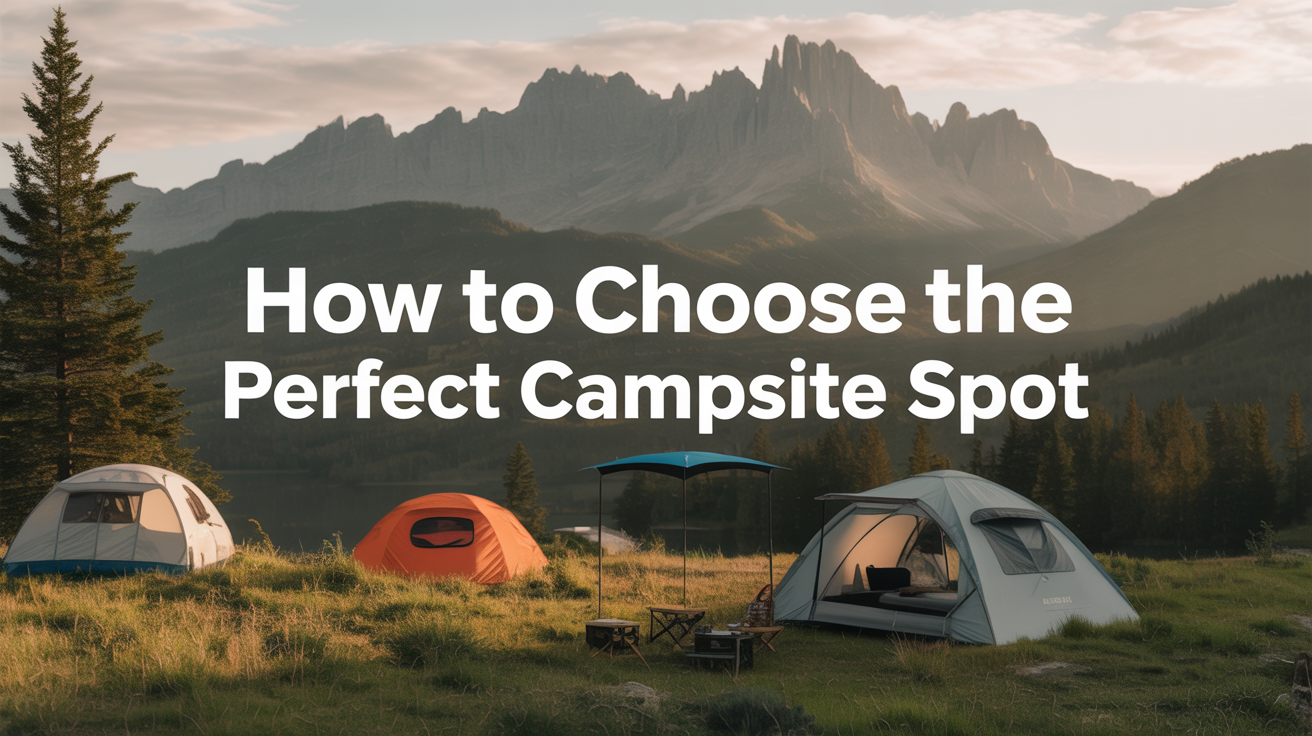
The difference between a good night's sleep and a miserable one often comes down to decisions you make in the first ten minutes at camp. Picking a tent spot isn't glamorous, but it's one of the most practical skills you can build. Here's what to look for.
Read the Ground Before You Unpack
The first thing to check is what's under your feet. Flat, firm, natural ground is what you want. A slight slope is fine if the tent door faces downhill, but anything noticeable will have you sliding into the tent wall by midnight.
Look for Durable Surfaces
On established campgrounds, you'll usually find a cleared dirt or gravel pad. Use it. In the backcountry, the Leave No Trace standard is to camp on durable surfaces: bare dirt, rock, dry grass, or gravel. Avoid setting up on living vegetation like moss, wildflowers, or soft meadow plants. One night won't kill them, but repeated pressure from boots and tent stakes will.
Check for Rocks and Roots
Get down and scan the ground with your hand before committing. A rock the size of a quarter feels harmless through a boot but will wake you up at 3 a.m. if it's under your hip. Move it or move the tent.
Drainage Matters More Than It Looks
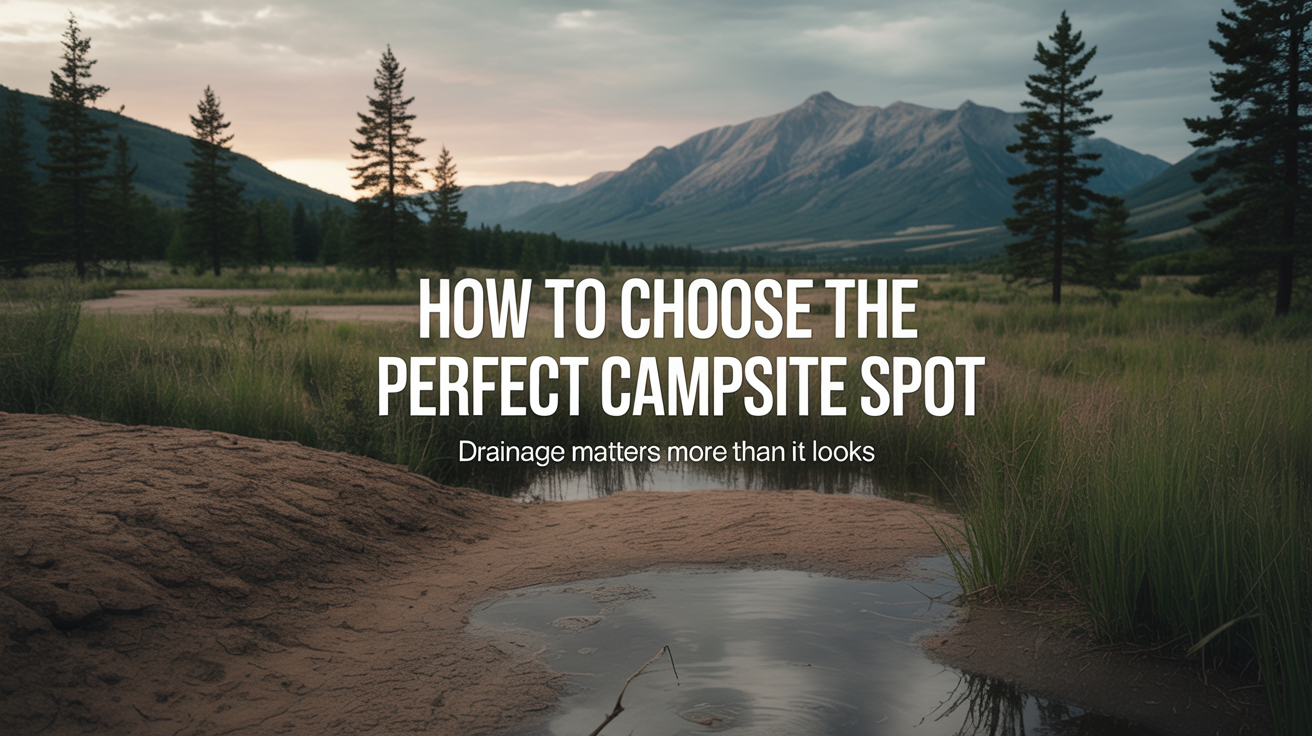
Rain changes everything. A flat spot in a shallow depression looks great in dry weather and fills with water the moment a storm rolls through.
Avoid Low Spots
Rainwater follows gravity to the lowest point. If your tent is the lowest point, you will find out. Look for ground that sits slightly higher than the surrounding area or slopes gently away from the tent on at least two sides. Even a few inches of elevation relative to the surrounding terrain makes a difference.
Check for Natural Channels
Look around for any shallow channels or lines where water has flowed before. Dry streambeds and faint gullies are easy to miss when the sky is clear. If you see one, camp well away from it. Flash flooding in desert or mountain terrain can fill a dry channel in minutes.
Wind, Shade, and Sun Exposure
Comfort over a two-night trip is largely a function of temperature, and you have more control over that than most beginners realize.
Use Natural Windbreaks
A boulder, a dense stand of trees, or a hillside on the windward side of your tent keeps the wind off without blocking airflow entirely. Avoid fully enclosed hollows, though. Cold air sinks and pools in low spots overnight; a sheltered hollow that feels pleasant at sunset can be ten degrees colder by morning.
Plan for Morning and Afternoon Sun
East-facing sites get morning sun, which warms a cold tent quickly and dries condensation. West-facing sites stay warm into the evening. In summer heat, shade during the hottest part of the afternoon (roughly noon to 3 p.m.) matters more than sun exposure. In cold conditions, the reverse is true. Think about the weather you expect and position accordingly.
Safe Distances: Water, Trails, and Facilities
Two Hundred Feet from Water
Camp at least 200 feet (roughly 70 adult steps) from any lake, river, stream, or wetland. This protects the water source from contamination and gives wildlife unobstructed access to drink. It also keeps your tent out of the flood zone in case water levels rise overnight.
Some Distance from Trails and Other Campers
Pitching right on a trail is bad for obvious reasons. A bit more subtly, camping very close to a trail means early-morning hikers and late-arriving groups pass within earshot. Twenty or thirty feet of buffer goes a long way. In designated campgrounds, respect site boundaries for the same reason.
Proximity to Toilets
Toilets close enough to reach in the dark without a headlamp is a real quality-of-life win. Far enough away that you're not sleeping next to them is also a win. Fifty to a hundred feet is a reasonable range in an established campground.
Check Overhead for Widow-Makers
Before you stake anything, look up. Dead branches caught in tree canopy are called widow-makers because they fall without warning, sometimes in calm weather, sometimes in the middle of the night. You're looking for large dead limbs, leaning trees, or broken branches suspended in the canopy above your tent footprint.
If you see any, move the tent. Even a small branch falling from height can punch through a tent and injure a sleeping person. This check takes thirty seconds and is non-negotiable.
Leave No Trace Campsite Selection
Leave No Trace (LNT) is a set of outdoor ethics, not rules enforced by anyone, but they protect the places you're camping in. The campsite selection principle is simple: camp where others have camped before, and avoid creating new impact.
In developed campgrounds, use the designated site and the established fire ring. In the backcountry, look for an existing site with a worn footprint. If no site exists, spread out across durable surfaces and move your camp location if you stay more than one night. Don't dig trenches around the tent or clear vegetation. Pack out everything you packed in.
For more on setting up camp once you've found your spot, see how to set up a tent: a step-by-step guide.
Quick Campsite Selection Checklist
Use this before you commit to a spot.
What to look for:
- Flat or very gently sloping ground
- Firm, durable surface (dirt, gravel, bare rock, dry grass)
- Slightly elevated relative to surrounding terrain
- Natural windbreak on the prevailing wind side
- At least 200 feet from water sources
- Clear overhead canopy (no dead limbs above the tent)
- Reasonable distance from trail and facilities
- Existing footprint if camping in the backcountry
What to avoid:
- Depressions or hollows where water collects
- Dry streambeds or obvious drainage channels
- Living vegetation, moss, or fragile ground cover
- Spots directly under dead trees or hanging branches
- Tent footprints that cross a trail or access path
- Less than 200 feet from any water source
- Spots that require clearing rocks, cutting roots, or flattening brush
Once you're set up, you'll want to know how to build a campfire and put it out safely and how to stay warm while camping overnight.
Frequently Asked Questions
How do I choose a campsite when everything looks the same?
Start with the checklist above and work from the most critical factors first: overhead hazards, drainage, and distance from water. In dense forest where the ground looks uniform, walk a short loop and compare two or three candidate spots before committing. The best spot usually becomes obvious once you've looked at three options side by side.
Is it okay to pitch a tent on grass?
Short, dry grass on slightly elevated ground is fine. Tall, wet grass holds moisture and will soak the tent floor overnight even without rain. Avoid soft, lush meadows in sensitive backcountry areas where repeated camping causes lasting damage to fragile ecosystems.
What if the campground is full and there's no ideal spot left?
Take what's available, prioritize the overhead safety check above everything else, and use a groundsheet or footprint to protect against damp ground. You can compensate for a less-than-ideal location with a good sleeping pad and waterproof footprint, but you can't undo a widow-maker falling on a tent.
How far from the campfire ring should I pitch my tent?
Most established rings are placed with tent positioning in mind, but as a rule of thumb, ten feet is a minimum safe distance. Embers can travel, especially in wind. Check which direction the wind is blowing and position the tent door on the upwind side of the ring so smoke drifts away.
Do I need to check for widow-makers in a developed campground?
Yes. Developed campgrounds do maintenance, but trees drop limbs on their own schedule and maintenance isn't always current. The check takes less than a minute. Do it every time.