Campsite Skills
How to Build a Campfire (and Put It Out Safely)
A beginner's step-by-step guide to building a campfire safely, choosing the right wood, and putting it out completely before you sleep or leave camp.
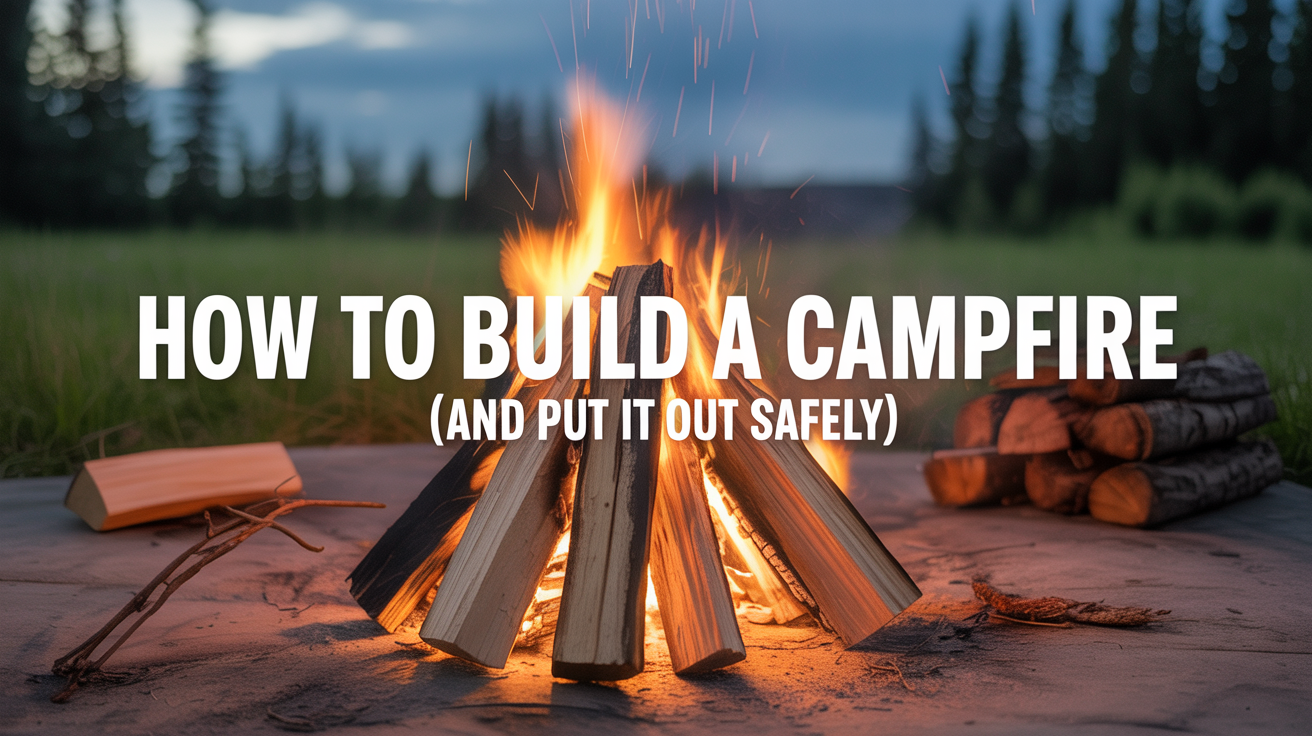
A campfire is one of the most satisfying parts of camping, warmth, light, a place to cook, something to stare at when the conversation runs out. It's also one of the easiest things to mess up. This guide walks you through everything from checking whether fires are even allowed that day, to the moment you can confidently walk away from a cold ash pile.
Before You Strike a Match: Know the Rules
The most common mistake beginners make is skipping this step entirely.
Check for fire bans. Many land managers issue burn bans during dry periods, and they apply even to established fire rings. Look up the specific agency that manages where you're camping: US Forest Service, Bureau of Land Management, a state park, a private campground. Most post current restrictions on their websites, and many sites have a sign at the entrance. If you can't find clear information, call the ranger station directly. Fines for fires during a ban can run into hundreds of dollars, and you could be held liable for any fire that spreads.
Use an established ring. If a metal fire ring or rock ring already exists at your campsite, use it. Don't build a second one nearby. If no ring exists and fires are permitted, choose bare mineral soil at least 15 feet from tents, shrubs, and overhead branches. Clear away dry leaves and grass for a few feet in every direction.
Know your site rules on wood. Many parks prohibit bringing firewood from outside the area to prevent the spread of insects and disease. Buy local wood near where you're camping, or use wood collected on-site if the rules allow it.
Picking the right campsite to begin with makes fire setup easier. See our guide to how to choose the perfect campsite spot.
The Three Materials Every Fire Needs
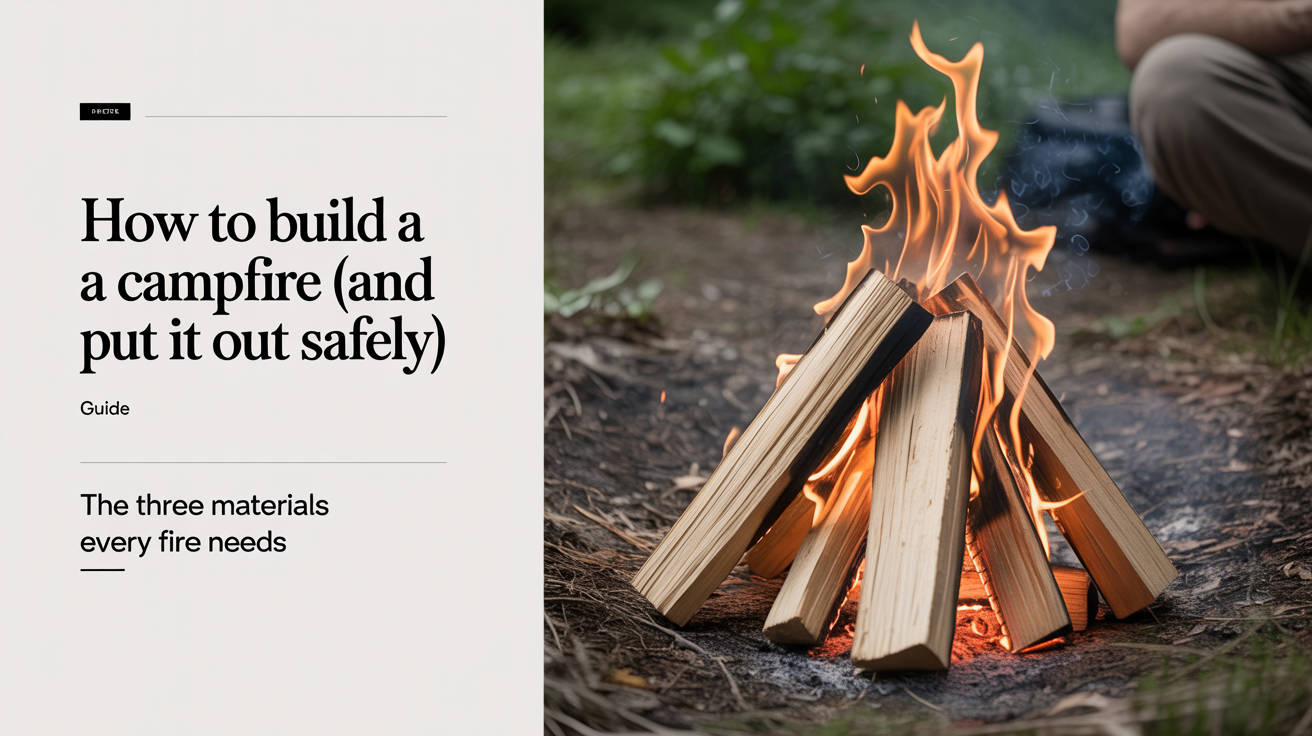
A fire is just a chain reaction. It needs fuel, heat, and oxygen. When a campfire fails to start, it's almost always because one of those three things is missing or wet. The practical version of this looks like three categories of material:
Tinder, the starter material. This catches a spark or small flame and burns long enough to ignite kindling. Good tinder includes dry leaves, dry grass, birch bark, pine needles, commercial fire starters (fatwood sticks, wax-based cubes), or dryer lint. It must be dry and loosely packed so air can move through it.
Kindling, small sticks and twigs, roughly pencil to thumb thickness. These catch from the burning tinder and produce enough sustained heat to ignite your main fuel. Snap them; if they crack cleanly, they're dry enough. Wet kindling just smolders.
Fuel (firewood), the logs that actually sustain the fire. Use dead, dry wood. Hardwoods like oak, maple, and hickory burn longer and produce more heat. Softwoods like pine ignite faster but burn quickly and pop more. Never cut live branches from standing trees. "Dead and down" (already fallen, not rotting) is the standard.
Collect more than you think you need, especially tinder and kindling. Running out of kindling before the fuel logs catch is a very common failure point.
Two Fire Lays That Actually Work
A "fire lay" is just the arrangement of your materials before you light it. Two shapes cover most situations.
Teepee (Best for Getting Started)
This is the easiest and most reliable lay for beginners:
- Place a small bundle of tinder in the center of your fire ring.
- Lean kindling sticks over the tinder, angling them so they meet at the top like tent poles. Leave a small gap on the windward side (the direction wind is coming from) so air feeds the flame.
- Add a second, looser layer of slightly larger kindling around the first.
- Light the tinder at the base, near that windward gap.
- As the kindling catches, lean small fuel logs against the teepee. Let the structure collapse inward as it burns, that's normal.
Log Cabin (Better for a Sustained Cooking Fire)
- Place your tinder bundle in the center.
- Lay two pieces of kindling parallel on either side of the tinder, like railroad tracks.
- Lay two more pieces perpendicular across the first two, forming a square. Repeat with slightly larger sticks until you have a low stack.
- Light the tinder in the center. The structure feeds air up through the gaps and collapses into a bed of coals.
The log cabin produces a flatter, more even burn. If you plan to cook over the fire, this is the better starting shape.
Lighting and Managing the Fire
Once your lay is set, light the tinder at the base. A long-reach lighter is easier than matches in wind. If you're using matches, cup your hand around the flame to block the breeze.
Don't rush. The biggest mistake beginners make after lighting is piling on large logs too soon. Let the tinder fully ignite the kindling before adding fuel. If you smother a fledgling fire with a heavy log, you'll have to start over.
Keep the fire small. A fire doesn't need to be large to be useful. A foot-high flame produces plenty of warmth and is far easier to control and extinguish than a bonfire. Large fires also produce more sparks, which can travel farther in wind.
Never leave an active fire unattended. Not for a quick trip to the car. Not while you're setting up your tent. If you leave camp, even briefly, the fire goes out first. This is a rule, not a suggestion.
For cold nights when the fire alone isn't enough, see how to stay warm while camping.
How to Extinguish a Campfire Completely
This is the part most guides rush through. It deserves full attention because most accidental wildfires start from fires that weren't actually out.
The standard is simple: if it's too hot to touch, it's too hot to leave.
Follow these steps every time:
- Stop feeding the fire at least 30 minutes before you plan to leave or sleep. Let existing logs burn down to ash.
- Drown the fire with water. Pour water slowly and evenly over the entire fire, including the edges. You'll hear hissing, keep going until it stops completely.
- Stir the ash. Use a stick or camp shovel to mix the wet ash and embers together. This exposes any hidden hot spots underneath.
- Drown again. Add more water and stir again. Continue until you stop seeing steam or smoke.
- Feel for heat. Hold your hand close to (not touching) the ash. If you feel any warmth at all, it's not out. Repeat the drown-and-stir cycle.
- Check the edges. Embers at the perimeter of the ring stay hot longer than the center. Wet them specifically.
If you don't have extra water (this is why carrying more than you think you need matters), you can use dirt or sand as a substitute, mixed thoroughly into the embers. Dirt alone is less reliable than water, so use water when you have it.
Never bury hot coals. Buried embers can smolder for hours and reignite when wind exposes them.
Frequently Asked Questions
How long does it take to put out a campfire?
Budget at least 20 minutes for a proper extinguishment. Larger fires take longer. If you need to leave by a certain time, stop adding wood earlier than you think necessary. Rushing this step is how campfires escape.
Can I use lighter fluid or accelerants to start a campfire?
Most campground rules prohibit accelerants, and they're genuinely dangerous on a campfire scale. A commercial fire starter (fatwood, wax-based cube) or a cotton ball with petroleum jelly is plenty effective and much safer. Save the lighter fluid for a dedicated charcoal grill.
What wood should I avoid burning?
Avoid green (living) wood, it produces heavy smoke and barely burns. Avoid driftwood, which often contains salt that releases toxic chlorine gas when burned. Avoid pressure-treated lumber, painted wood, or anything that's been chemically treated. Stick with natural, dry, dead wood.
My fire keeps going out. What am I doing wrong?
Usually one of three things: the tinder or kindling was damp, you added fuel logs before the kindling was fully burning, or the fire didn't have enough airflow. Try smaller kindling, make sure your tinder is truly dry, and leave a gap in the windward side of your lay when you build it.
Is it okay to burn trash in a campfire?
No. Burning trash (plastic, foil, food packaging) releases toxic compounds and leaves residue that doesn't fully burn. Pack out all trash. Even food scraps should generally go in a bear canister or hang bag rather than into the fire, since a small campfire doesn't get hot enough to fully incinerate them and can attract animals.
A well-built campfire is a genuine skill, but it's not complicated once you understand the sequence: verify it's legal, gather the right materials in three sizes, arrange them so air can move, light from the base, keep it manageable, and put it fully out before you walk away. Once that sequence is habit, you'll stop losing fires to wet kindling and stop worrying about whether you left it safe.
For the rest of your camp setup, see how to set up a tent.