Campsite Skills
How to Set Up Camp: Organizing Your Campsite
Learn how to set up camp efficiently with this beginner guide to campsite layout, tent placement, kitchen zones, food storage, and Leave No Trace basics.
Getting to your site with two hours of daylight left feels like plenty of time until you're still hunting for tent stakes at dusk. A clear order of operations fixes that. Set up the big stuff first, then the comfort stuff, and you'll be eating dinner by the time the light goes golden.
At a Glance
- Scout for two minutes first: drainage, level ground, overhead dead branches, the fire ring.
- Tent goes up before anything else, with sleeping bags laid out immediately so they start lofting.
- Kitchen at least 100 feet from the tent, on the downwind or sheltered side if you can manage it.
- Food storage is its own zone, separate from both sleeping and cooking.
- Work in order: tent, sleep system, kitchen, food storage, water, fire, dinner, cleanup.
- Leave No Trace habits cost almost no time and keep the site usable for the next camper.
Arrival: First Look Before You Drop Your Pack
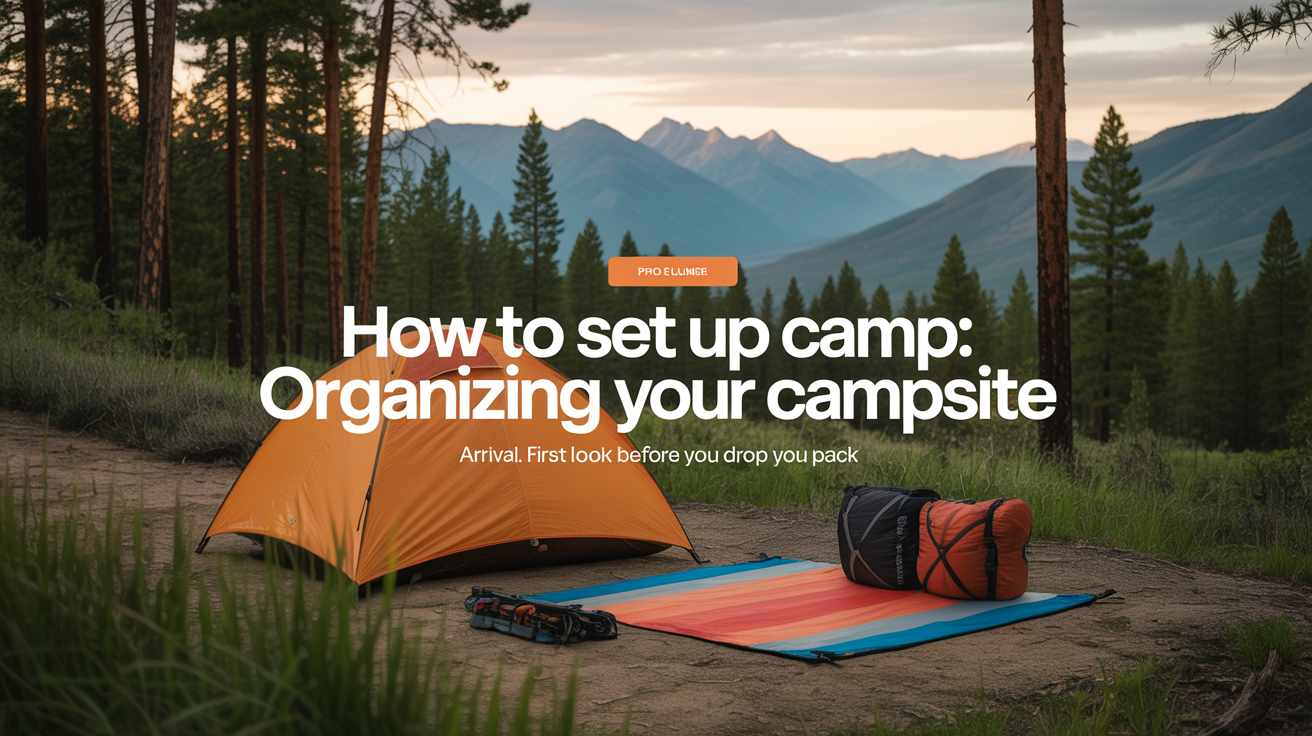
Before you touch a single stake, walk the site for two minutes. You're looking for a few things: where water drains after rain (low spots fill up), where the ground is level and clear of roots, and where the designated fire ring is if there is one.
Most developed campgrounds have a fire ring already positioned. That ring becomes the anchor point for your whole campsite layout. Almost everything else gets arranged around it.
Check for overhead hazards too. Dead branches sitting in a tree above a tent can fall in wind; foresters call this a "widowmaker" for a reason, and it is one of the few genuinely dangerous things at an otherwise calm campsite. A quick scan takes thirty seconds and matters.
Once you have a read on the space, drop your pack. Now the work starts.
Where to Put the Tent
Level ground is the first priority. Even a slight slope puts you sliding toward one wall all night. If you have options, choose a spot where your head will be slightly uphill rather than your feet.
Clear away pinecones, sticks, and rocks before you lay down your footprint or ground cloth. A pebble under a sleeping pad feels like a brick by 3am.
Face the tent door away from the prevailing wind if you can tell which direction that is. This keeps drafts from blowing in every time you open the zipper. In most campsites you'll get a feel for it by how the trees are moving, or by checking which way smoke from a neighboring fire is drifting.
Keep the tent a reasonable distance from the fire ring. Sparks travel, and tent fabric is not fire-resistant. Ten to fifteen feet is a comfortable buffer, more if it's windy enough to carry embers further than usual. For a full walkthrough of pitching technique, see our guide on how to set up a tent: a step-by-step guide.
If you have any choice about which specific area to use within a site, read through how to choose the perfect campsite spot before committing.
The Kitchen Zone
Put your kitchen area at least 100 feet from your tent. That distance is not just a Leave No Trace guideline; it keeps food smells away from where you sleep, which matters in bear country and is good practice anywhere.
The kitchen zone is where you'll keep your stove, cookware, food prep supplies, and a small trash bag. Set up near a flat surface, whether that's a picnic table, a bear box lid, or a flat rock. Cooking on the ground is harder than it sounds and easier to spill.
Think about wind here too. A stove in a crosswind is an exercise in frustration and burns fuel faster than it should. If your site has a natural windbreak (a boulder, a thicker stand of trees), set up kitchen prep on the sheltered side.
Food Storage Zone
Food storage is its own zone, separate from cooking and definitely separate from sleeping. The goal is to put distance and barriers between your food and any animal that might smell it. The National Park Service puts it plainly in its bear food storage guidance: storing food and disposing of garbage properly "can mean life or death to a bear," because animals that learn to associate campsites with an easy meal keep coming back, which usually ends badly for the animal.
The storage method depends on where you are:
- Bear boxes or bear lockers: Use them if the site has one. They exist precisely because the campground has wildlife activity.
- Bear canister: Keeps food in a rigid container animals cannot open. Carry this if the area requires or recommends it. Some parks require food lockers or bear-resistant containers outright, while others allow hanging instead, so check the specific regulations for where you're going rather than assuming.
- Hang system: If regulations allow, hang food at least 10 feet off the ground and 4 feet out from a tree trunk using a stuff sack and rope.
- Car trunk: At a car-camping site without specific bear-box rules, locking food in your vehicle overnight works. Do not leave food in your tent or cooler on the ground outside.
Whatever method you use, also keep scented items in storage: toothpaste, sunscreen, lip balm, trash with food waste. Animals investigate smells they do not recognize, and a bear canister left unlocked or a bag hung too close to the trunk defeats the purpose.
Order of Operations Before Dark
Work through this sequence when you arrive with daylight to spare. Rough time estimates assume two people working together at a developed site; solo setup or unfamiliar gear can take longer.
| Step | Task | Rough time |
|---|---|---|
| 1 | Scout the site | 2 minutes |
| 2 | Pitch the tent, fly, and stakes | 10–15 minutes |
| 3 | Lay out sleeping bags and pads to loft | 5 minutes |
| 4 | Set up the kitchen zone and stove | 10 minutes |
| 5 | Set up food storage or hang the food bag | 5–10 minutes |
| 6 | Collect and treat water if supply is low | 10–20 minutes |
| 7 | Gather firewood (down and dead only, or use provided wood) | 15–20 minutes |
| 8 | Cook and eat dinner | 30–45 minutes |
| 9 | Clean up fully, pack food and waste into storage | 15 minutes |
| 10 | Build or maintain the campfire once cooking is done | Ongoing |
That order keeps you from getting halfway through dinner setup while realizing your sleeping bags are still in a stuff sack getting cold.
For fire setup itself, see how to build a campfire and put it out safely.
Leave No Trace at Your Campsite
Organizing a campsite well naturally aligns with Leave No Trace principles. The core habits, drawn from the seven Leave No Trace principles as the National Park Service teaches them:
Camp on durable surfaces. Set up your tent on established tent pads, bare dirt, rock, or gravel. Avoid camping on grass or fragile vegetation. At a developed campground, this is mostly handled for you. At a dispersed backcountry site, spread out foot traffic to avoid creating new worn paths.
Pack out everything you pack in. This includes food scraps, fruit peels, and used packaging. Biodegradable does not mean leave it on the ground.
Keep waste at least 200 feet from water sources. For human waste in the backcountry, dig a cathole 6 to 8 inches deep, the same depth and distance the Park Service recommends for any wastewater you scatter after washing dishes. At sites with toilets or vault latrines, use them instead.
Leave what you find. Rocks, plants, and natural features stay where they are.
Reduce fire impact. Use existing fire rings when they are there. Never build a new one if a site already has one, even if it is inconvenient. Burn wood down to ash, and drown the ash before you leave.
A well-organized camp that respects these habits is also just easier to manage. Clutter is where things get lost, gear gets damaged, and food ends up where it should not.
Frequently Asked Questions
How far should the kitchen be from the tent? At least 100 feet (about 30 meters) is the standard recommendation, and it is used in Leave No Trace training. In a developed campground where you have a fixed site, do the best you can within the space you have. Even a picnic table between your cooking area and tent adds some separation.
Is it okay to cook inside the tent if it rains? No. Cooking inside a tent creates carbon monoxide risk and is a fire hazard. In rain, cook under your site's shade structure if there is one, or rig a tarp shelter over your kitchen area. Freestanding canopy tarps and trekking-pole shelters work well for this.
What if the site has no bear boxes? Check the specific regulations for the area before you go. Some places require a bear canister; others recommend hanging. If there are no bears in the region at all, locking food in your car is generally fine. Never leave food in your cooler on the ground overnight regardless of wildlife risk; raccoons, squirrels, and other small animals are also very motivated.
Do I need to worry about campsite layout at a car campground? The basic separation of sleeping, cooking, and food storage still applies even at a drive-in site with a picnic table and fire ring. You have more flexibility because the site is established, but keeping food out of the tent and cleaning up the kitchen before bed is worth doing every time.
How do I keep the campsite tidy throughout a multi-day trip? Do a quick sweep each morning before you leave for a hike: tent zipped, food in storage, nothing loose on the ground that could attract animals or blow away. Come back each evening with the setup routine already in mind. A tidy campsite at night is also much easier to break down on your last morning when you want to get an early start.
What's the single biggest layout mistake beginners make? Pitching the tent right next to the kitchen because it feels convenient. It puts food smells next to where you sleep, and it means every dinner spill or dropped ember is a few feet from your gear. The 100-foot separation feels like overkill on a small site, but even doubling the distance you'd instinctively choose makes a real difference.
Should I set up camp differently if I'm arriving after dark? Yes, simplify. Pitch the tent using a headlamp and skip the full scouting walk if the site is already assigned and cleared, just check immediately overhead and underfoot with your light. Get sleeping bags out and food secured before doing anything else; a proper kitchen setup and fire can wait until morning if you're tired and working by headlamp.