Camp Cooking
How to Keep Food Cold While Camping
Learn how to keep food cold camping with practical cooler tips: pre-chilling, block ice, two-cooler setup, packing order, and food-safety temperatures.
Your food will stay cold longer than you expect, or spoil faster than you want. Which one happens depends almost entirely on what you do before you leave home. The cooler itself matters less than most beginners think; technique is what actually moves the needle.
Here's the short version: pre-chill everything, use block ice, keep the lid closed, and know that 40°F (4°C) is the line between safe and risky. The rest of this guide fills in the details.
At a Glance
- Pre-chill the cooler and the food the night before; a warm cooler burns off half its ice life just cooling itself down.
- Block ice outlasts cubed ice by roughly two to three days for the same weight.
- Run two coolers if you can: one for drinks people open all day, one for food that needs to stay consistently cold.
- Pack raw meat on the bottom, sealed and double-bagged; pack ice above and below the food layer.
- Keep the cooler in shade at all times; direct sun can raise interior temperature 10 to 15°F in an afternoon.
- Treat 40°F as the hard line. Food above it for more than two hours (one hour above 90°F air temperature) should be discarded.
Pre-Chill Everything Before You Pack
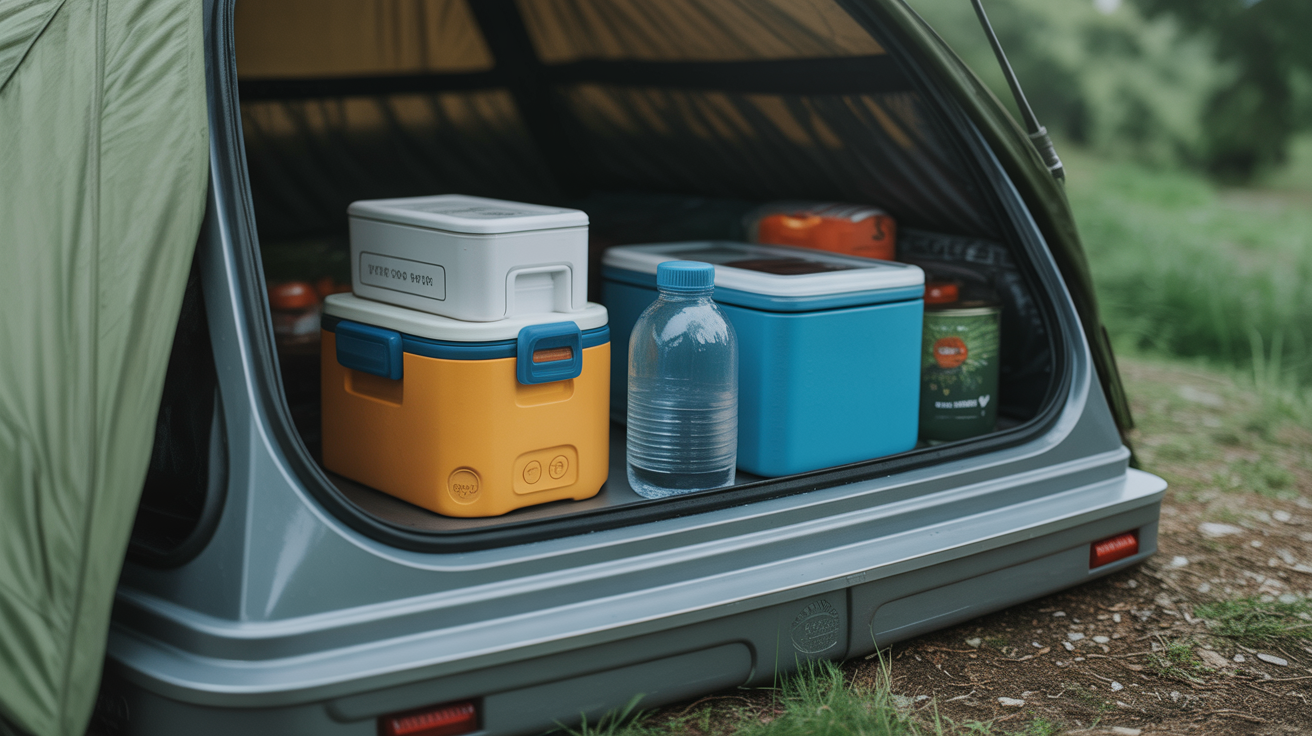
Most of the cold in a cooler gets burned off in the first few hours just bringing warm food and a room-temperature cooler down to a safe temperature. Skip that waste by starting cold.
Cool Down the Cooler the Night Before
The night before your trip, fill your cooler with a sacrificial bag of ice or a few freezer packs. Let it sit overnight, then dump that ice in the morning before you pack. A pre-chilled cooler can add 12 or more hours to your ice life compared to packing into a warm one.
Freeze What You Can
Meat, stews, marinated proteins, freeze them solid a day or two before you leave. They act as additional ice blocks inside the cooler, and they thaw slowly during the trip so they're perfectly ready to cook on day two or three. Ground beef and chicken breasts both freeze and thaw well for camping purposes.
Pre-chill everything else in the refrigerator down to 35 to 38°F before packing. A cold item stays cold; a warm item steals cold from everything around it. The FDA's guidance on refrigeration temperatures sets 40°F as the ceiling for safe refrigerator storage at home, and the same number carries over directly to a loaded cooler: anything you pack should already be at or below that line, not working its way down to it over the first few hours of the drive.
Block Ice vs. Cubes: Choose Wisely
This is the single highest-impact decision you'll make about ice.
Block ice lasts dramatically longer than cubed ice. A 10-pound block bought at a gas station will outlast the same weight in cubes by roughly two to three days. The reason is surface area: cubes expose far more of their total mass to warm air and warm food, so they melt fast. A dense block melts from the outside in, slowly.
| Ice Type | Approximate Lifespan | Best Use |
|---|---|---|
| Block ice | 3-5 days | Food cooler, multi-day trips |
| Cubed ice | 1-2 days | Drink cooler, day trips |
| Dry ice | 5-7 days | Long trips, items that must stay frozen (handle with gloves) |
| Reusable freezer packs | Varies by brand | Short trips, day hikes |
If you can only find cubed ice locally, buy it in a large, dense block from a grocery store rather than the loose-bag kind. Some grocery stores sell 20-pound blocks in the meat section.
A practical hybrid approach: lay one or two large blocks at the bottom of the cooler, then fill gaps with cubed ice to pack around food. The blocks anchor the temperature; the cubes fill the voids.
A rough ice budget for planning: figure one pound of ice per person per day for a well-insulated, pre-chilled cooler in moderate heat, and closer to two pounds per person per day in hot weather or a budget cooler with thinner walls. A four-person, three-day trip in summer heat is a reasonable case for 20 to 24 pounds of ice split across your food and drink coolers.
The Two-Cooler Strategy
One cooler for drinks and snacks. A separate cooler for food that needs to stay consistently cold (raw meat, dairy, eggs, leftovers).
This is the most underrated tip in camping food storage. Every time someone reaches into the drink cooler for a beer or a soda, warm air rushes in and warm hands touch the ice. If that's happening 20 times a day, your drink cooler is working overtime. That's fine for drinks. It's not fine for your chicken thighs.
Keep the food cooler closed except when you're actually cooking or plating. Open it once, take out what you need, close it. The temperature inside rebounds much faster when you limit air exchanges.
If a two-cooler setup isn't realistic for your trip, at minimum dedicate one section of the cooler to drinks using a divider or a separate zip bag of ice.
How to Pack a Cooler (Order Matters)
Bottom Layer: Ice
Start with a solid layer of block ice or a thick bed of cubed ice at the bottom. Cold air sinks, so the bottom of the cooler stays coldest. Anything that absolutely cannot spoil (raw meat, poultry, fish) should sit directly on this bottom layer, sealed in waterproof bags.
Middle Layer: Food That Needs to Stay Cold
Pack in roughly the reverse order of when you'll use it. Food for day three sits at the bottom; day one food goes near the top. This way you're digging through less ice on the first night.
- Raw meat: double-bagged, bottom layer
- Dairy (butter, cheese, milk): middle layer, wrapped in a zip bag
- Eggs: in a hard-sided container, middle layer
- Leftovers: in sealed containers, upper-middle
Top Layer: Ice and Snacks
Cap everything with another layer of ice. Snacks you'll grab frequently can go on top of this ice layer or in a mesh pocket if your cooler has one.
A quick packing checklist:
- Cooler pre-chilled overnight
- All food pre-chilled to below 40°F before packing
- Block ice on the bottom
- Raw meat double-bagged and on the lowest level
- Dairy and eggs sealed in containers
- Second ice layer on top before closing
- Drink cooler separate from food cooler
Keeping the Cold In: Shade, Covers, and Habits
Location at the Campsite
Place your cooler in shade at all times. Direct sun on a dark cooler can raise internal temperature by 10 to 15°F over the course of a hot afternoon. Under a picnic table, under a tarp, or in the shadow of your vehicle all work. Avoid putting it in your car unless you're actively traveling; a parked car in summer is an oven. This matters for more than comfort: the U.S. Forest Service's camping guidance also flags food and coolers left out in the open as a wildlife draw, not just a spoilage risk, so shade and a closed lid solve two problems with one habit.
A reflective emergency blanket or a dedicated cooler cover draped over the outside provides a meaningful temperature buffer on hot days.
Drain Water or Keep It?
There's a genuine debate here. Melted ice water (called "melt water") stays very cold and actually helps maintain temperature around food items. Draining it removes that thermal mass. Unless your food is floating or your cooler is completely draining on its own, leave the melt water in. Drain it only if meat packaging has leaked and contaminated the water.
Resist the Urge to Open It
Every minute a cooler lid is open is a minute of cold escaping. Get organized before you open: know exactly what you're pulling out. Batch your cooking prep so you open the cooler once per meal, not seven times.
Food Safety Temperatures
The USDA defines the "danger zone" as between 40°F (4°C) and 140°F (60°C). Bacteria multiply rapidly in that range, doubling in number in as little as 20 minutes under the right conditions. Food left in the danger zone for more than two hours total (one hour if air temperature is above 90°F/32°C) should be discarded.
A small digital thermometer dropped into your cooler gives you real information instead of guesswork. If the interior climbs above 40°F, you need more ice, less opening, more shade, or all three.
Perishable food that has been above 40°F for an unknown amount of time should not be tasted to check if it's still good. When in doubt, throw it out. Food poisoning in the backcountry is a serious problem, not a minor inconvenience, and it's a genuinely bad way to end a trip that was otherwise going well.
For more on what to actually cook once you've got your cold storage sorted, the beginner's guide to cooking while camping covers camp stove basics and fire cooking from scratch. The easy camping meals for beginners post has specific recipes designed around what keeps well in a cooler. If you want to go fully fire-based, how to cook over a campfire walks through heat management and timing.
Frequently Asked Questions
How long does a cooler stay cold while camping?
A quality cooler packed correctly with block ice will hold temperature for three to five days in moderate heat. Budget coolers with cubed ice might last 24 to 48 hours. Pre-chilling both the cooler and the food before packing is the biggest variable you control.
Should I put ice on top or bottom of food in a cooler?
Both. A layer of ice on the bottom keeps the coldest zone at the lowest point (cold air sinks). A layer on top traps cold air inside the cooler when you open the lid. The most effective packs have ice above and below the food.
Can I use dry ice in a regular cooler?
Yes, with caveats. Dry ice is frozen carbon dioxide (minus 109°F / minus 78°C) and sublimates into gas rather than liquid, which keeps your cooler dry. But it requires ventilation (don't seal it in an airtight space), insulated gloves to handle, and it will freeze anything it directly touches solid. Line it with cardboard or newspaper if you don't want your produce frozen. It's overkill for a weekend trip but genuinely useful for trips of five days or more.
How do I keep ice from melting so fast?
Four things help more than anything else: pre-chilling the cooler the night before, using block ice instead of cubed, keeping the cooler in shade, and opening the lid as rarely as possible. Limit air exchanges and you limit melt.
What foods don't need refrigeration for camping?
Hard cheeses (parmesan, aged cheddar), cured meats (salami, pepperoni), peanut butter, crackers, nuts, dried fruit, oatmeal, instant coffee, and most fresh fruits and vegetables last a day or two at ambient temperature without any problem. Building your meal plan around a mix of refrigerated items and shelf-stable ones lets you stretch cooler space and ice life significantly.
How much ice should I bring for a weekend trip?
As a starting point, budget one to two pounds of ice per person per day, leaning toward the higher end in hot weather or with a lower-quality cooler. For a typical two-person, two-night trip, that's roughly 8 to 12 pounds split between a food cooler and a drink cooler. Bring more than the estimate if you have any doubt; unused ice just melts into perfectly good cold water, while running short means warm food halfway through the trip.
Is it safe to refreeze food that partially thawed in the cooler?
It depends on temperature, not appearance. If the food stayed at or below 40°F the entire time, even if it's no longer frozen solid, it's safe to cook or refreeze. If it warmed above 40°F for more than two hours, treat it as spoiled and discard it regardless of how it looks or smells. A cooler thermometer removes the guesswork here.