Camp Cooking
Easy Camping Meals for Beginners
Simple, beginner-friendly camping meals that actually taste good. Breakfast burritos, no-cook lunches, foil packet dinners, and more.
Camping food doesn't need to be complicated. The best beginner camping meals share a few traits: minimal cleanup, ingredients that travel well, and techniques you can nail without a fully equipped kitchen. This guide covers the whole day, from your first morning coffee to dessert on the last night.
If you want a broader look at camp cooking methods and gear, this beginner's guide to cooking while camping is a good starting point.
Breakfast at Camp
Mornings are when most beginners overcomplicate things. Hot food is great, but you don't need to make pancakes on day one.
Scrambled Eggs and Breakfast Burritos
Crack your eggs into a leak-proof container at home and refrigerate overnight. At camp, heat a small amount of butter or oil in a pan over medium flame, pour in the eggs, and stir slowly until just set. Load them into a flour tortilla with pre-shredded cheese and hot sauce packets. Takes about five minutes.
Make-ahead version: At home, fully cook and season the scrambled eggs, wrap tightly in foil with the tortilla and cheese, and refrigerate. At camp, warm the whole packet directly on the grill grate for 3 to 4 minutes per side. Zero prep, almost zero cleanup.
Oatmeal With Real Add-ins
Instant oats cooked in boiling water are fast, but they taste like cardboard unless you build them up. Pack brown sugar, dried fruit, and nuts in small zip bags. A scoop of peanut butter stirred in adds protein and makes it filling enough to last through a morning hike.
No-Cook Breakfast Option
Greek yogurt cups, granola bars, and fresh fruit require no fire and no cleanup. On arrival morning or any morning where you want to get moving fast, this is the right call.
Lunch: No-Cook Saves Fuel and Time
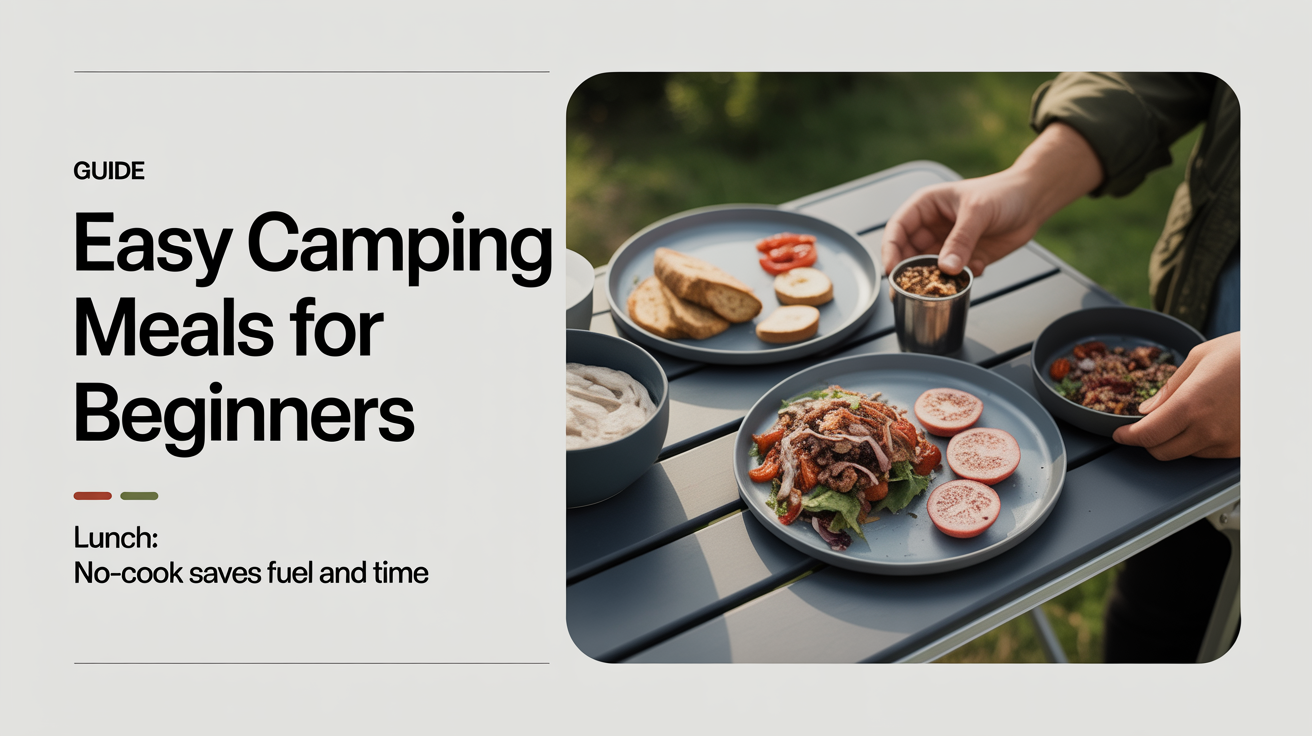
Lunch is the meal most experienced campers don't cook. You're usually mid-hike or breaking down camp. Save your fuel for breakfast and dinner.
Trail Wraps and Sandwiches
Pita bread holds up better than sliced bread in a pack. Fill it with:
- Peanut butter and honey
- Canned tuna (pack the pouches, not cans), mayo packets, and relish
- Deli turkey, cheese, and mustard (keep these in your cooler; eat within day two)
Crackers, Cheese, and Charcuterie
Hard cheeses like cheddar and gouda last two to three days without refrigeration. Hard salami keeps even longer. Slice and eat with crackers. No cooking, no cleanup, and it feels like a proper lunch.
Cold Pasta Salad (Made at Home)
Cook pasta the night before your trip. Toss with olive oil, drained canned chickpeas, halved cherry tomatoes, olives, and Italian dressing. Pack in a sealed container in your cooler. It improves overnight. Serves well cold with zero camp prep.
Keeping ingredients like this safe and cold is its own skill; this guide on how to keep food cold while camping covers cooler management in detail.
Dinner: One-Pot Meals and Foil Packets
Dinner is where you can put in a little more effort and actually enjoy the result. Two methods work especially well for beginners: one-pot cooking and foil packets on coals.
One-Pot Pasta
This is the single easiest hot dinner you can make at camp. Everything goes in one pot, nothing gets drained, and cleanup is minimal.
Ingredients: 8 oz pasta (rotini or penne), 2 cups chicken or vegetable broth, 1 cup water, half a jar of marinara sauce, Italian seasoning, parmesan to finish.
Method: Combine pasta, broth, water, and seasoning in your pot. Bring to a boil, then reduce flame and simmer uncovered, stirring occasionally, until the pasta absorbs most of the liquid (about 12 minutes). Stir in the marinara, heat through, and top with parmesan. Serves two to three people.
Foil Packet Meals on Coals
Foil packets cook directly on campfire coals and produce almost no dishes. Assemble them at home for even less camp effort.
Basic foil packet formula:
- Lay two sheets of heavy-duty foil flat and place your protein (chicken thighs, shrimp, sausage slices) in the center.
- Add vegetables cut roughly the same size (bell pepper strips, zucchini coins, par-boiled potato slices).
- Drizzle with olive oil, season generously with salt, pepper, and garlic powder.
- Fold the foil tightly around the contents, sealing all edges.
- Place on a bed of glowing coals (not flames), cook 20 to 25 minutes for chicken, 12 to 15 for shrimp, flipping halfway.
The moisture trapped inside steams the contents. You eat straight from the packet. See how to cook over a campfire for guidance on managing coals and heat levels.
Campfire Chili
Brown canned beans and canned diced tomatoes at home if you want, or just combine them at camp. Heat a pot with a little oil, brown sliced smoked sausage (pre-cooked; no raw meat concerns), add a drained can of kidney beans, a can of diced tomatoes, chili powder, cumin, and a pinch of cayenne. Simmer 15 minutes. Eat with crackers or over instant rice.
Sample Weekend Camp Menu
| Meal | Ingredients | How to Cook |
|---|---|---|
| Friday Dinner | One-pot pasta, marinara, parmesan | Single pot, camp stove, 15 min |
| Saturday Breakfast | Scrambled eggs, tortillas, cheese | Pan on stove, 5 min |
| Saturday Lunch | Tuna pita wraps, crackers | No cook |
| Saturday Dinner | Chicken and veggie foil packets | Coal bed, 25 min per side |
| Sunday Breakfast | Oatmeal with nuts and dried fruit | Boiling water, 5 min |
| Sunday Lunch | Peanut butter and honey pita | No cook |
| Dessert | S'mores, or banana boats | Campfire, 5-10 min |
Banana boats: Slice a banana lengthwise through the peel, stuff with chocolate chips and mini marshmallows, wrap in foil, and place on coals for 8 minutes. The inside turns into warm, gooey chocolate banana pudding.
Snacks and Desserts
Snacks matter on camping trips because you burn more calories hiking than sitting at a desk.
Trail Mix You Actually Make
Store-bought trail mix is often too sweet or too salty. Mix your own: roasted almonds, cashews, dark chocolate chips, dried cranberries, and sunflower seeds. Bag in portions for each person each day.
Energy-Dense Options
String cheese, beef jerky, hard-boiled eggs (cooked at home), and apple slices with peanut butter cups hold up well in a cooler and provide real energy between meals.
S'mores
The classic exists for a reason. Graham crackers, chocolate bars, and marshmallows. Toast the marshmallow over coals, not flames, for an even brown rather than a charred shell. Press between the crackers immediately.
Frequently Asked Questions
What food should I bring for a 2-night camping trip?
Plan three to four meals per day per person: breakfast, lunch, dinner, and snacks. For a two-night trip (Friday dinner through Sunday lunch), that's roughly five main meals plus snacks. Pack one extra meal's worth of food in case something runs long or gets dropped. Choose at least two no-cook meals to reduce fuel use and cleanup time.
How do I keep food from spoiling at camp?
Use a hard-sided cooler with a good seal and pack it with block ice rather than cubed ice (block ice melts slower). Keep raw meat at the bottom in sealed bags so drips don't contaminate other food. Open the cooler as infrequently as possible. Keep it in shade during the day. Most cold food stays safe for two to three days with good ice management.
Can I prep camping meals at home?
Yes, and you should. Pre-chopping vegetables, marinating meat, pre-cooking pasta, and pre-assembling foil packets at home removes most of the annoying kitchen work from the campsite. Store prepped food in labeled bags or containers. It saves time, reduces mess, and cuts down on what you need to pack in terms of cutting boards and knives.
Do I need a camp stove or can I just use a campfire?
A camp stove gives you more consistent heat control and works even when fire restrictions are in place. Campfires are great for foil packets, s'mores, and anything that benefits from low, slow, indirect heat. For beginners, bringing both a small backpacking stove and planning one campfire meal gives you flexibility without complexity.
What are the easiest camping dinners that don't require refrigeration?
If you're backpacking or don't have a cooler, focus on shelf-stable ingredients. Instant ramen upgraded with a packet of miso paste, dehydrated mushrooms, and a soft-boiled egg cooked at camp is a solid dinner. Canned beans cooked with olive oil, garlic, and tortillas is another. Pesto pasta made with shelf-stable pesto packets and dried pasta requires no refrigeration and no real cooking skill.