Camp Cooking
How to Cook While Camping: A Beginner's Guide
Learn camp cooking for beginners: gear, fire vs stove, food safety, simple meal plans, and cleanup. Everything you need for your first campsite kitchen.
Good camp food does not require a Dutch oven full of stew and a fire that burns for hours. On your first few trips, the goal is simple: hot food that fuels you, food safety you can trust, and cleanup that does not take longer than eating. This guide covers exactly that, gear list, meal plan, and the numbers that keep food safe with no fridge in sight.
At a Glance
- Start with a stove, not a fire. It lights instantly, holds steady heat, and works in rain.
- Keep cold food below 40°F and hot food above 140°F; everything between is the danger zone.
- Never run a stove inside a tent or vestibule. Carbon monoxide builds up fast in an enclosed space.
- Plan one cooked breakfast, one no-cook lunch, one cooked dinner per day to minimize dishes.
- A 1-lb propane canister runs about an hour on high with a two-burner stove.
- Treat all natural water by boiling, filtering, or chemical treatment before drinking or cooking with it.
Stove vs. Campfire: Which Should Beginners Use?
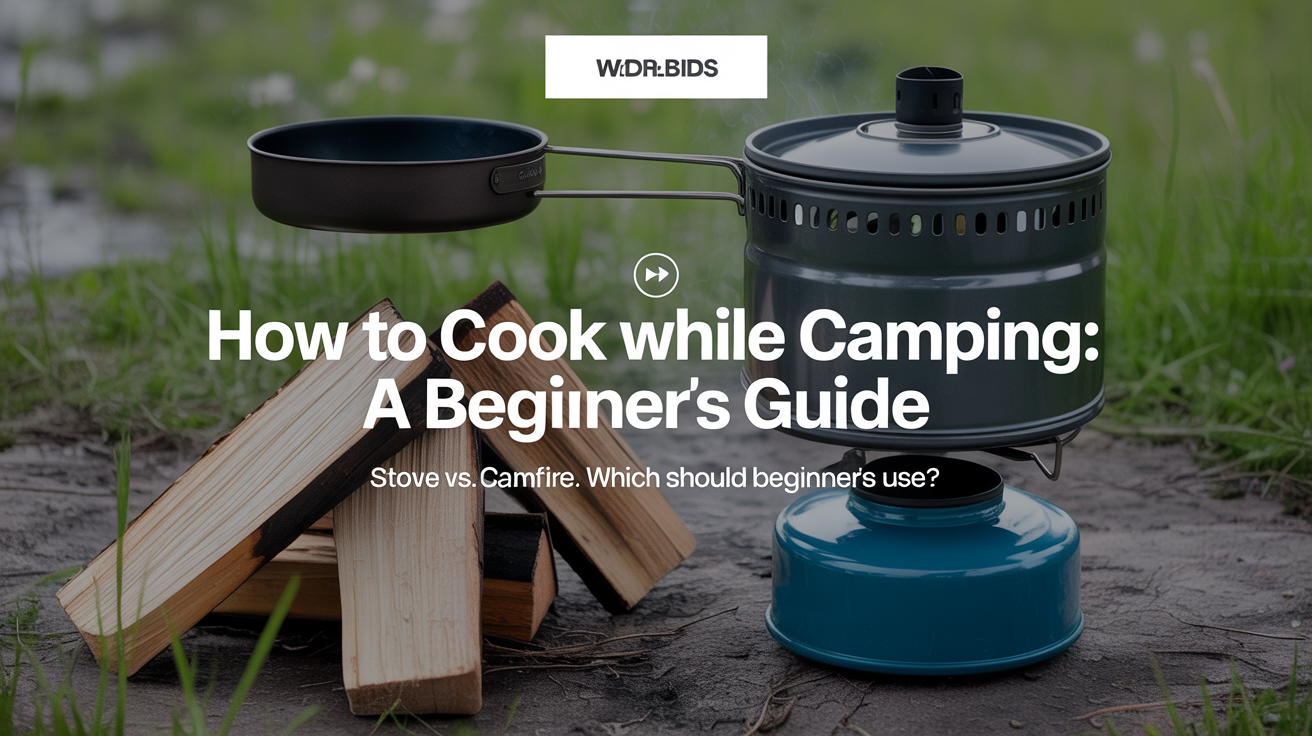
Most beginners do better starting with a camp stove rather than cooking over a fire. Here is why.
A campfire takes practice to build and maintain at a consistent cooking temperature. Wind, wet wood, and poor airflow can leave you with a roaring inferno one minute and dying coals the next. Many campgrounds also restrict or ban open fires, especially during dry seasons.
A stove lights instantly, holds a steady flame, and works in rain. Two main types suit car campers:
Two-burner propane stove. The most beginner-friendly option. It works like a kitchen range, runs on standard 1-lb or bulk propane canisters, and gives you two burners to cook a main dish and boil water at the same time. Coleman makes the most commonly seen version. Expect to spend $40 to $80 for a solid unit.
Canister stove. A compact single-burner that screws onto a threaded isobutane canister. Good for backpacking or solo camping. It boils water fast and packs small, but cooking anything that needs low, steady heat is trickier.
Once you are comfortable with a stove and want to add campfire cooking, read our guide to cooking over a campfire for techniques that actually work.
Stove safety basics
- Set the stove on a flat, stable surface away from tent fabric and dry brush.
- Never use a camp stove inside a tent or enclosed shelter. Carbon monoxide builds up fast, and it's an invisible risk: the National Fire Protection Association describes CO as an "odorless, colorless gas created when fuels burn incompletely," which is exactly what a stove does in a sealed vestibule with no airflow. The same guidance applies to charcoal and gas grills, which the NFPA notes should only ever be used outside.
- Light the match or lighter before opening the gas valve, not after.
- Store propane canisters away from heat sources and out of direct sun.
Your Camp Kitchen Checklist
You do not need every piece of gear sold in a camp store. This list covers the essentials for two to four people cooking on a weekend trip.
Cooking gear
| Item | Notes |
|---|---|
| Two-burner propane stove | 1-lb canister lasts roughly 1 hour on high |
| Medium saucepot (2-3 qt) | Boiling water, pasta, oatmeal |
| 10-inch skillet with lid | Eggs, sausage, stir-fry, one-pot meals |
| Cutting board | Flexible plastic; easy to pack |
| Chef's knife | One good knife beats four mediocre ones |
| Wooden spoon + spatula | Silicone tips resist heat |
| Can opener | Forgotten more often than you would think |
| Lighter or matches (x2) | Always bring a backup |
Eating and cleanup
| Item | Notes |
|---|---|
| Plates or bowls (per person) | Enameled metal or durable plastic |
| Mugs (per person) | For coffee, tea, or soup |
| Cutlery (per person) | Spork or fork/knife/spoon set |
| Dish tub (collapsible) | For washing up |
| Biodegradable soap | Leave no trace rule |
| Scrubber sponge | |
| Trash bags | Pack out everything |
| Paper towels | Underrated for grease and spills |
Food storage
- Hard-sided cooler (good insulation matters more than brand)
- Reusable zip bags or containers
- Bear canister or bear bag if the campground requires it
Planning Simple Meals: A Three-Day Structure
Campsite cooking basics start with planning before you leave home. Prep as much as possible in your kitchen, where you have running water, a full-size cutting board, and trash disposal.
A useful mental model: one cooked breakfast, one no-cook lunch, one cooked dinner per day. That minimizes dishes and cooking time without eating cold food for every meal.
Sample 3-meal day plan
Breakfast
- Scrambled eggs and pre-cooked sausage (cook sausage at home, reheat in skillet)
- Or: instant oatmeal with dried fruit and nuts
Lunch
- Wraps with peanut butter and honey, or deli meat and cheese kept cold in the cooler
- Crackers, fresh fruit (choose fruit that travels well: apples, oranges, grapes)
- Trail mix or granola bars
Dinner
- Pasta with jarred marinara and pre-browned ground beef (brown meat at home and freeze it)
- Or: foil packets of pre-seasoned chicken and vegetables cooked on the stove or grill grate
For more no-fuss ideas, see our roundup of easy camping meals for beginners.
Home prep that pays off at camp
- Chop vegetables and store them in zip bags.
- Marinate proteins overnight in a sealed container.
- Measure out dry spices into small bags or a pill organizer.
- Pre-cook grains (rice, quinoa) and reheat in a skillet with a splash of water.
- Freeze raw meat solid before it goes in the cooler; it keeps longer and acts as an ice block.
Food Safety: Keeping Food Cold and Safe
Food safety matters more at camp, not less. You do not have a refrigerator nearby if something goes wrong.
The core rule: keep cold food cold (below 40°F) and hot food hot (above 140°F). The danger zone is everything in between. That 40°F line is not arbitrary. The FDA's guidance on storing food safely is explicit that refrigerated food should never sit at room temperature for more than two hours, or one hour if the air temperature is above 90°F, a rule that applies just as much to a cooler lid left open at a summer campsite as it does to a kitchen counter.
How long you actually have
| Ambient temperature | Safe time out of the cooler |
|---|---|
| Below 90°F | Up to 2 hours total |
| Above 90°F (hot car-camping afternoon) | 1 hour total |
| Food already above 40°F when packed | Treat the clock as already running |
That clock is cumulative across the trip, not reset each time you close the cooler. A pack of deli meat that's been out for 40 minutes at lunch and 50 minutes at dinner prep is already at 90 minutes; don't let it sit out again after that.
Cooler management
A good cooler packed well will hold temperature for two to three days. A mediocre cooler packed carelessly will let food spoil by day two.
- Pre-chill the cooler the night before with ice or frozen water bottles. A warm cooler melts ice fast.
- Pack food in reverse order of when you will eat it. Things you need last go in first.
- Keep raw meat at the bottom in sealed containers or double-bagged. Raw meat juice contaminating other food causes illness.
- Use block ice rather than cubed if you can. It melts slower. Alternatively, freeze two-liter bottles of water ahead of time.
- Minimize how often you open the cooler. Every open lets warm air in.
- Keep the cooler out of direct sun. Under a tarp or in the shade of a tree works well.
- Drain water regularly; standing water accelerates ice melt and can flood food packaging.
For a deeper look at keeping food safe over a longer trip, see how to keep food cold while camping.
Raw meat rules
- Never partially cook meat and finish it later. Cook it fully in one go.
- Use a separate cutting board for raw meat if you are cutting it at camp.
- Wash hands (or use hand sanitizer) after handling raw protein.
- If something smells wrong, throw it out. The risk is not worth it.
Water: What You Need and How to Get It
Water is the most overlooked part of campsite cooking basics. You need it for boiling pasta, making coffee, washing hands, and doing dishes.
Car camping with potable water on site: Fill a 5-7 gallon water jug before you leave the campground spigot or at home. This covers drinking, cooking, and dishes for a weekend.
Camping without a potable water source: You will need to treat water from a stream, lake, or well. Public health guidance on backcountry water, including the CDC's travel health recommendations, consistently points to the same three options:
- Boiling: Bring water to a rolling boil for one minute (three minutes above 6,500 feet elevation). Reliable but uses fuel.
- Filter: A squeeze filter or pump filter removes bacteria and protozoa. Faster than boiling for large volumes.
- Chemical treatment: Iodine or chlorine dioxide tablets work but leave a slight taste and take 30 minutes.
Never assume natural water is safe to drink untreated, even if it looks clear and runs fast.
Cooking at Camp: Practical Techniques
Knowing the gear and the plan is one thing. Knowing how to actually cook on a stove burner 12 inches wide is another.
Heat management
Camp stoves run hotter than most home ranges on the high setting. Start with medium heat, then adjust. Cast iron retains heat well; thin aluminum pans overheat quickly.
For eggs: medium-low heat, a little butter or oil, and lid on. Takes about three minutes.
For pasta: fill the pot two-thirds with water, bring to a full boil on high, add pasta, and stir once every couple of minutes. Times on the package are accurate.
For one-pot meals (rice with chicken, beans with sausage): bring to a simmer, put the lid on, and reduce to the lowest flame your stove will hold. Check every five minutes.
Wind is the enemy
Wind cools your burner and wastes fuel. If your stove does not have a built-in windscreen, position it behind a natural windbreak or buy a lightweight folding windscreen (under $10 at most outdoor stores). Do not enclose the stove completely; it needs airflow for combustion.
Altitude adjustment
At high elevation, water boils at a lower temperature and cooking takes longer. Add a few extra minutes to boiling times for pasta or grains above 5,000 feet.
Cast iron at camp
A cast iron skillet is heavier than aluminum but forgiving of uneven camp stove heat, and it doubles as a fire-grate pan if you want to cook over coals later in the trip. Keep it simple: wipe it out with a paper towel after cooking while it's still warm, avoid soap on a well-seasoned pan (a little residue is fine and protects the surface), and rub in a thin layer of oil before it goes back in the storage bag. If food sticks, a pinch of coarse salt scrubbed with a paper towel works better than scraping with metal utensils, which strip the seasoning.
Dishes and Cleanup
Cleanup at camp has two goals: hygiene and leaving no trace.
The three-tub method
Set up three containers of water:
- Wash: Hot water plus a small squeeze of biodegradable soap. Scrub dishes here.
- Rinse: Clean water. Dunk and swirl dishes to remove soap.
- Sanitize (optional): A few drops of unscented bleach in cold water. Air dry after.
Disposing of gray water
Do not dump dish water on the ground right next to your camp. Leftover food particles attract animals and the soap can harm plants. Instead:
- Strain out food particles with a fine mesh strainer into your trash bag.
- Disperse the strained gray water at least 200 feet (about 70 paces) from camp, water sources, and trails. This is the standard Leave No Trace distance.
Food scraps and trash
Pack out everything. Every wrapper, every food scrap, every coffee ground. Leave nothing behind. If your campground has bear boxes, use them for food and scented items overnight. If not, hang a bear bag or use a hard-sided bear canister.
A simple habit: bring a dedicated trash bag that you fill throughout the day, then take it home when you pack up.
Frequently Asked Questions
What is the easiest way to cook while camping for the first time?
Start with a two-burner propane stove and meals you already know how to make at home. Scrambled eggs, pasta with sauce from a jar, and soup from a can are all beginner-friendly because the technique is familiar. The campsite just means doing it outdoors on a slightly different stove.
Do I need a campfire to cook camping food?
No. A propane stove is more reliable, easier to control, and works in conditions where fires are not allowed. Many experienced campers cook exclusively on stoves and only build fires for ambiance, not for meals.
How do I keep food from spoiling on a two or three night trip?
Pack a quality cooler with pre-chilled ice or frozen water bottles, minimize how often you open it, keep raw meat at the bottom in sealed packaging, and drain meltwater daily. Eat the most perishable items (fresh fish, raw meat) on the first night, and treat anything that's been above 40°F for more than two hours as compromised.
Can I cook in my tent vestibule if it rains?
No. Never use a camp stove inside a tent or under a rain fly. Carbon monoxide from a stove can build to dangerous levels in minutes in a confined space, and it gives no warning smell before it does. Set up a tarp shelter over your picnic table or cook under a pop-up canopy instead.
How much fuel does a camp stove use per day?
A standard 1-lb propane canister runs roughly 60 minutes on high with a two-burner stove. For a weekend of cooking three meals a day for two people, plan on two to three canisters, depending on how long you run the burners. Buying in bulk (the larger refillable tanks with an adapter) is cheaper for frequent campers.
What temperature should meat actually be cooked to?
Ground beef and pork need to reach 160°F internally. Whole cuts of beef, pork, lamb, and fish need 145°F with a three-minute rest. Chicken and other poultry, whether ground or whole, need 165°F. A $10 instant-read thermometer settles the guesswork that ruins more camp dinners than bad weather does; color alone is not a reliable way to judge doneness on an open flame or uneven stove burner.
Is it safe to reuse a marinade as a sauce?
Only if you boil it first. Marinade that touched raw meat or poultry carries the same bacteria the meat did. Set aside a separate portion before marinating if you want a sauce, or bring the used marinade to a full rolling boil for at least one minute before serving it over cooked food.