Camping Gear
How to Choose a Camp Stove
A practical guide to picking your first camp stove: stove types, fuel options, and how to match the right setup to how you actually camp.
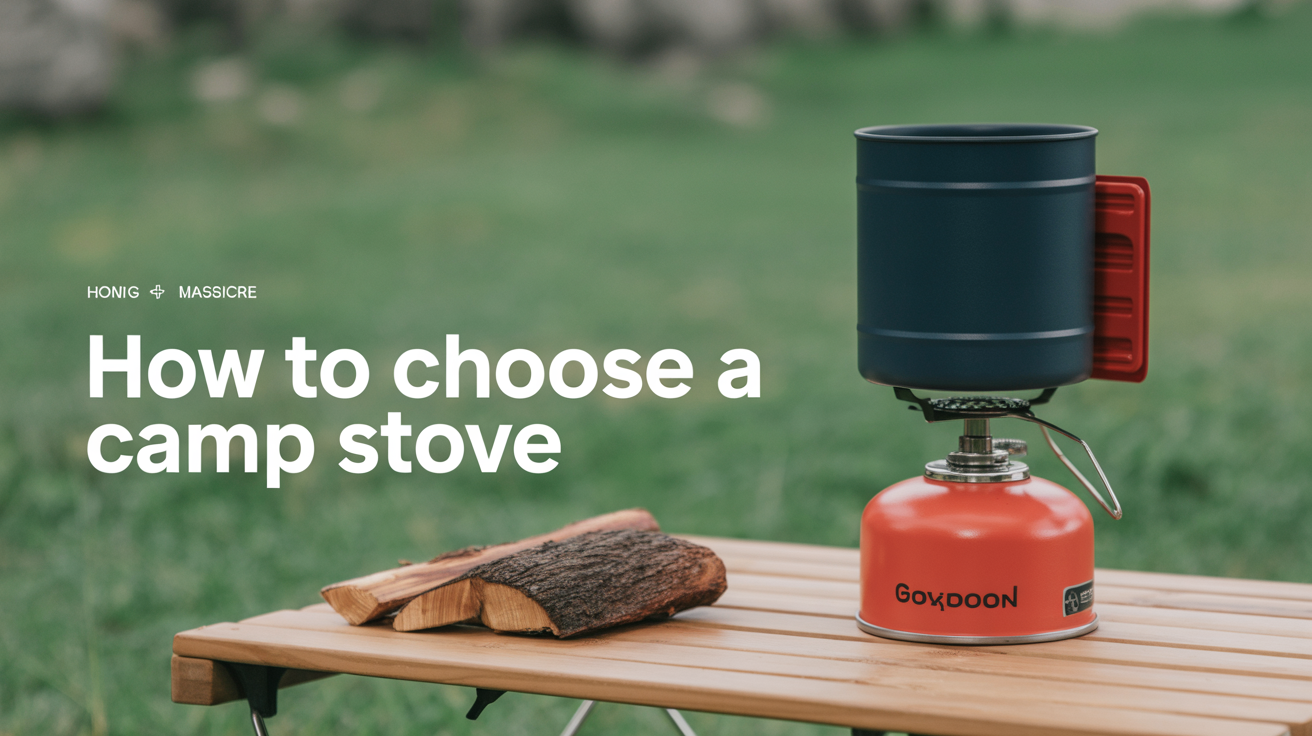
The camp stove is the one piece of gear that turns a campsite into a place you actually want to linger. Pick the wrong one and you're fumbling with canisters in the dark or lugging a propane tank onto a trail. Pick the right one and hot coffee is ready in five minutes no matter where you are.
This guide walks through the main stove types, how fuel choice affects your experience, and how to match a stove to your actual camping style.
Types of Camp Stoves
There are four main categories. Each exists for a reason, and the "best" one depends entirely on where you're going and how you're getting there.
Two-Burner Propane Stoves (Car Camping)
If you drive to your campsite, start here. Two-burner propane stoves sit on a picnic table, run on standard 1-lb green canisters or a 20-lb tank via a hose adapter, and behave more like a kitchen range than camping equipment. You get real heat output (10,000–20,000 BTU per burner), two cooking zones, and a wide grate that handles a full skillet or a large pot simultaneously.
These are heavy (4–8 lbs), which is irrelevant when you're walking ten feet from your car. They don't pack into a stuff sack, but they fit in a camp kitchen bin just fine. For families or anyone cooking real meals at a campground, this is the practical default.
Canister Stoves (Backpacking)
Canister stoves screw directly onto a threaded isobutane/propane canister. The whole system (stove head + 100g fuel canister) can weigh under 4 oz. That's the appeal for backpackers: minimal weight, no priming, and clean ignition in seconds.
The trade-off is real. Isobutane canisters lose pressure as the fuel level drops and as temperatures fall. Below 20°F (-7°C), output drops noticeably. In sustained wind, a canister stove without a windscreen can barely boil water. Many experienced backpackers carry a small reflective windscreen and position their stove out of gusts. For three-season trips above freezing, a canister stove is excellent. For winter mountaineering or high-altitude use, read on.
Liquid-Fuel Stoves
Liquid-fuel stoves burn white gas (MSR WICK Fuel, Coleman Camp Fuel) and are the traditional choice for cold-weather and high-altitude expeditions. Unlike canisters, white gas performs well below freezing and is available globally. These stoves require priming (briefly heating the fuel line to vaporize it) and periodic maintenance, which adds complexity. They're heavier than canister stoves but lighter than two-burner units.
Some liquid-fuel stoves are multi-fuel, meaning they also run on unleaded gasoline or kerosene in a pinch. That matters if you're traveling internationally where isobutane canisters are hard to find.
Integrated Canister Systems
Integrated systems (sometimes called "pot-and-stove" systems) mate a canister stove to a specially designed cooking pot that captures heat from the sides, not just the bottom. This increases fuel efficiency significantly. A classic example of the approach: a recessed burner inside a finned pot produces less wasted heat.
These systems are ideal for ultralight solo backpackers who only need to boil water for meals, coffee, or hot drinks. They generally have a single, fixed pot size and limited simmer control. Don't expect to sauté vegetables.
Stove Comparison at a Glance
| Stove Type | Best For | Fuel | Pros | Cons |
|---|---|---|---|---|
| Two-burner propane | Car camping, families | 1-lb canisters or 20-lb tank | Two burners, high BTU, familiar to use | Heavy, bulky, not packable |
| Canister (backpacking) | 3-season backpacking | Isobutane/propane canister | Ultralight, instant ignition, no priming | Cold/wind performance drops, canister waste |
| Liquid-fuel | Winter/expedition | White gas (or multi-fuel) | Works in cold, globally available | Requires priming and maintenance |
| Integrated system | Solo ultralight backpacking | Isobutane/propane canister | Most fuel-efficient, compact | Single pot, minimal simmer control |
Fuel Types and What They Mean for You
Propane burns clean and hot at sea level. Two-burner car-camping stoves run on it almost universally. The 1-lb green canisters are cheap and sold at every outdoor retailer and most hardware stores. The downside: they're not refillable and disposal requires puncturing the empty canister (a special tool, not a kitchen knife).
Isobutane blends (usually labeled isobutane/propane) are the standard fuel for backpacking canister stoves. They vaporize at lower temperatures than pure propane, which helps marginally in cold conditions, though not enough for serious winter use.
White gas (refined naphtha) is the high-performance option for cold and altitude. It stores indefinitely in a sealed bottle, unlike canisters that slowly lose fuel over years. It produces no partially burned byproducts in a well-maintained stove.
Alcohol (denatured or HEET yellow bottle) is the ultralight minimalist's fuel. No moving parts, no canisters, near-silent. But output is low, simmering is nearly impossible, and it goes out in wind. Fine for a solo hiker who only needs to boil a cup of water for instant oatmeal.
Avoid burning any of these fuels inside a tent or enclosed shelter. Carbon monoxide from incomplete combustion is odorless and lethal. Always cook outside or under an open vestibule with significant airflow.
Simmer Control vs. Boil Speed
High BTU output is great for boiling a pot of water fast. But if you're cooking scrambled eggs or simmering a sauce, you need low-heat control, and not every stove delivers it equally.
Two-burner propane stoves typically have decent simmer range because they're large enough to accommodate better valve engineering. Many canister stoves have a wide power range too, though the exact simmer point varies by model. Integrated systems often prioritize boil speed over simmer finesse.
If your camp cooking involves more than boiling water, look specifically for stoves that mention "precise simmer control" or read user reviews focused on low-heat performance. The BTU number tells you how hot it gets; it doesn't tell you how low it can go.
Wind and Cold Performance
Wind is the enemy of small stoves. A canister stove rated at 10,000 BTU in a lab might barely boil water in a 15 mph breeze. Two-burner stoves often have built-in side panels that block wind partially. Backpacking stoves vary widely: remote-canister stoves (where the burner connects to the canister via a hose and sits low to the ground) handle wind better than top-mount designs.
Cold also matters. Isobutane loses pressure as the canister chills. A technique that helps: warm the canister in a jacket pocket before cooking. For anything below 20°F, a liquid-fuel stove is the more reliable choice.
If most of your camping is in mild conditions at established campgrounds, these factors are secondary. They become primary once you're above treeline or camping in shoulder seasons.
Matching a Stove to How You Camp
The fastest way to narrow your choice:
You drive to campsites, cook for 2-4 people, and want real meals. Get a two-burner propane stove. It's the most practical tool for this use case.
You hike in with a pack and camp in three-season conditions. A canister stove with a separate pot is the standard choice. Look for one with a piezo igniter so you're not carrying matches as a backup (though you should carry matches as a backup anyway).
You hike in, travel light, and mostly boil water for freeze-dried meals. An integrated canister system offers the best fuel efficiency for that single task.
You camp in winter or travel internationally. A liquid-fuel stove is worth the added complexity.
Pair your stove choice with appropriate cookware. If you bought a camping gear starter kit, you likely already have a pot that works with a backpacking stove. Two-burner stoves handle any standard cookware. Also make sure your shelter is sorted first: a stove is useless if you're cold and wet. See our guides on choosing a tent and sleeping bags if you're still building out your kit.
Frequently Asked Questions
What is the easiest camp stove for a complete beginner?
A two-burner propane stove is the most beginner-friendly choice for car camping. It connects to a standard propane canister, lights with a turn of the knob (on models with a built-in igniter), and cooks exactly like a gas range at home. No priming, no technique required.
For backpacking beginners, a basic canister stove with a piezo igniter is almost as simple: screw the canister on, turn the valve, press the igniter.
How much should I spend on a first camp stove?
A capable two-burner propane stove runs $50–$100 and will last years with basic care. Entry-level canister backpacking stoves start around $30–$50; add $15–$25 for a compatible pot if one isn't included. You don't need to spend more than this to get reliable performance.
Can I use a camp stove inside a tent?
No. Never use a camp stove inside a tent or any enclosed space. The carbon monoxide produced, even in small amounts, can accumulate to dangerous levels quickly. Cook outside, or under a fully open tent vestibule with unobstructed airflow. This rule applies to all fuel types.
What size propane canister do I need?
For a weekend trip using a two-burner stove for 2 people, a pair of 1-lb green canisters is usually enough for 3–4 hours of total cooking time. For longer trips or larger groups, a hose adapter and a 20-lb tank is more economical. For backpacking, a 100g canister covers roughly 2–3 days of solo cooking; a 227g canister is safer for a longer trip.
Are integrated pot systems worth it?
For solo backpackers who primarily boil water for freeze-dried meals, yes. The fuel savings over a standard canister stove are real and meaningful over multiple trips. If you want to cook varied meals, the single pot and limited simmer range will frustrate you, and a regular canister stove with a separate pot gives you more flexibility.