Getting Started
Hiking vs. Backpacking vs. Camping: What's the Difference?
Hiking, backpacking, and camping overlap but each has a different commitment level. Here's what sets them apart and which one to start with.
Quick answer: Hiking means walking a trail and returning to your car. Camping means sleeping outdoors, often at a drive-in site. Backpacking combines both: you hike in with everything you need on your back and sleep where you stop.
All three share the same outdoors, and they feed into each other naturally. Plenty of campers never backpack; plenty of hikers never camp. But understanding how they differ helps you decide where to start and what gear you actually need.
At a Glance
- Hiking: a trail walk that starts and ends at your car, same day, lowest gear investment.
- Camping: sleeping outdoors, usually at a drive-in site where your vehicle carries the weight.
- Backpacking: overnight hiking, where everything you need fits on your back for the whole trip.
- Weight is the real dividing line: it matters little for camping, a lot for backpacking.
- Start with hiking or car camping alone before combining both into a backpacking trip.
- A beginner backpacking trip is usually one to two nights with a two-to-five-mile approach.
What Is Hiking?
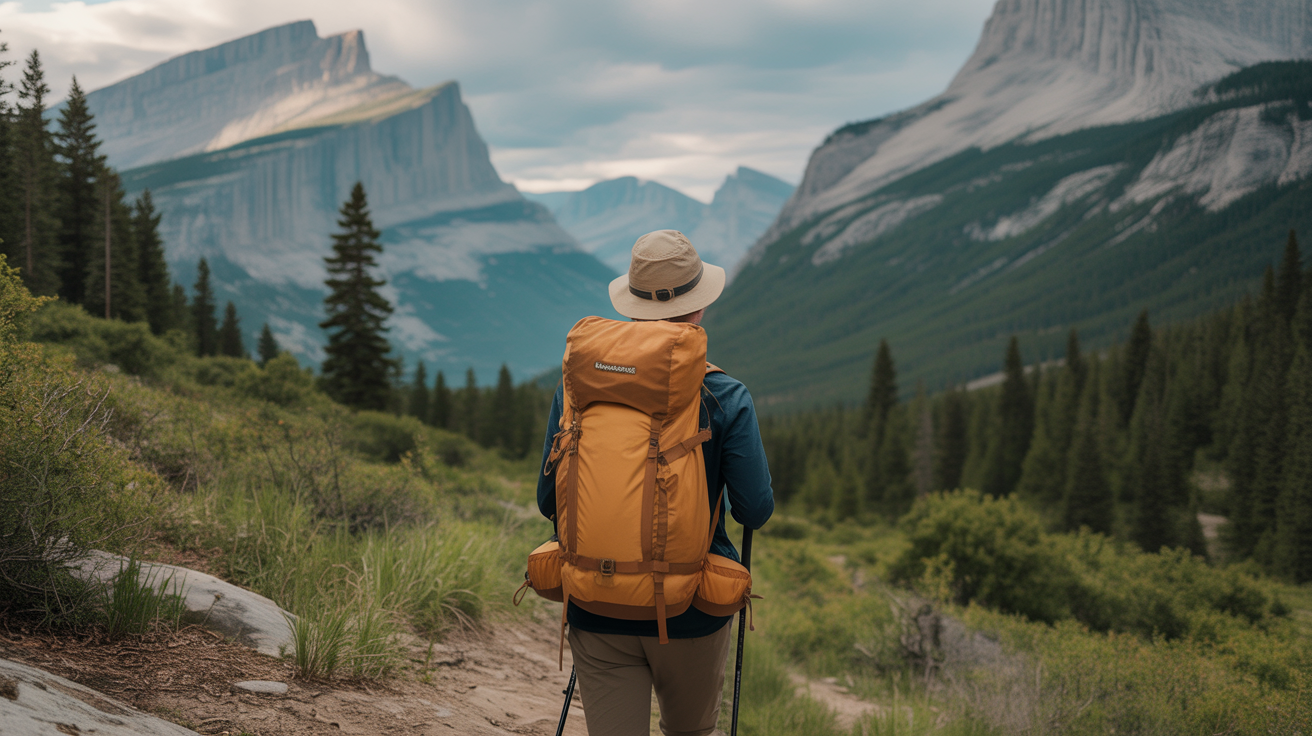
Hiking is a trail walk, usually measured in miles or hours, that starts and ends at a trailhead. You carry a daypack with water, snacks, a first-aid kit, and a few layers. At the end, your car is waiting.
Day hiking is the most accessible entry point to the outdoors. You do not need a permit (on most trails), you do not need to plan meals beyond a lunch, and you can bail early if the weather turns or your knees complain. A three-mile loop with 400 feet of elevation gain is hiking. So is a twelve-mile ridge traverse. The activity is the same; the scale changes.
Gear needed: trail shoes or hiking boots, a 20-25 liter daypack, 2+ liters of water, sun protection, a map or downloaded trail app, and a snack or two. That's the short list for most day hikes. The U.S. Forest Service's hiking guidance puts particular weight on hydration, advising hikers to drink steadily throughout the day rather than rationing down to nothing between refills, a habit that matters more on longer or hotter trails than beginners usually expect.
What Is Camping?
Camping means sleeping outside, typically at a designated campsite you drive to. Car camping, frontcountry camping, and drive-in camping are all names for the same thing: your vehicle sits at or near your site, so weight is not a constraint.
Because you can haul a cooler, a full cooking kit, a large tent, and a camp chair, car camping is comfortable and forgiving for beginners. You do not need to figure out ultralight gear. A standard sleeping bag and a folding chair from a discount store will get you through a weekend.
Camping usually involves setting up a tent, cooking over a camp stove or fire ring, and sleeping on a sleeping pad. Some sites have toilets and running water; primitive sites have neither. Most reservable drive-in sites, on federal land in particular, get booked through Recreation.gov, which covers thousands of campgrounds and individual sites across national forests, national parks, and other public lands.
If you want a full walkthrough of what to expect on a first overnight, Your First Camping Trip: A Step-by-Step Plan covers it in detail.
What Is Backpacking?
Backpacking is overnight hiking. You pack a tent, sleeping bag, sleeping pad, food, water filter, and cooking gear into a single pack, then hike from a trailhead to a campsite in the backcountry. Everything you need for the night has to fit on your back and weigh a number you can carry for miles.
That weight constraint is the main thing that separates backpacking from car camping. Backpackers typically target a base weight (everything except food and water) of 20 to 35 pounds for most beginner trips, though lighter is always more comfortable.
The payoff is access. Backcountry campsites are often deeper in wilderness than road-accessible sites, and the trail and the campsite are part of the same experience.
Backpacking requires more planning than either hiking or camping alone: you need a permit for many routes, a way to treat water, a system for hanging or storing food to avoid wildlife encounters, and Leave No Trace practices for waste and site impact. Many backcountry permits are also issued through Recreation.gov or the managing agency's own portal, and popular routes can book out months ahead in peak season, so this is one planning step worth starting early rather than the week of the trip.
How the Three Activities Overlap
| Hiking | Car Camping | Backpacking | |
|---|---|---|---|
| Overnight stay | No | Yes | Yes |
| Walking a trail | Yes | Sometimes | Yes |
| Weight matters | Low | No | High |
| Drive to site | Yes | Yes | No |
| Permit often needed | Sometimes | Yes (reservation) | Often yes |
| Best for beginners | Yes | Yes | After some experience |
| Gear investment | Low | Medium | Medium-high |
Car camping and hiking are both genuinely good starting points. Backpacking is the natural step after you have done both and want to combine them.
Typical Starter Costs by Activity
Budgets vary a lot by brand and how much you already own, but this gives a rough sense of what a first setup costs if you're buying rather than borrowing.
| Activity | Core Gear Needed | Rough Starter Budget |
|---|---|---|
| Day hiking | Shoes, daypack, water bottle, layers | $100-$250 |
| Car camping | Tent, sleeping bag, pad, cooler, stove | $250-$600 |
| Backpacking | All of the above, in lightweight versions, plus a backpacking pack and water filter | $600-$1,200 |
Renting or borrowing the big-ticket items (tent, sleeping bag, backpacking pack) for your first one or two trips is a reasonable way to test the activity before committing to any of these numbers.
Gear and Skill Differences
Hiking has the lowest barrier. Good footwear and enough water cover most beginner day hikes. Navigation skills are useful but a trail app handles most situations.
Car camping requires a tent, sleeping bag, and sleeping pad rated for the expected temperature. A basic camp stove and a cooler round out a first kit. You do not need to obsess over weight, so budget gear works fine.
Backpacking demands weight awareness in every purchase. A backpacking tent is lighter than a car camping tent. A sleeping bag rated to the expected low temperature is essential since there is no car to retreat to. A water filter or purifier replaces heavy bottled water. Food becomes shelf-stable meals or carefully planned snacks that pack small.
Skills-wise, backpacking adds: reading a topographic map, filtering water from a stream, hanging a bear bag or using a canister, and understanding how to manage blisters and minor injuries when you are miles from a trailhead.
Which Should You Start With?
Start with hiking or car camping, not both at once.
If you want to test your comfort outdoors before committing to overnight gear, spend a few Saturdays on trails first. You will learn whether you like moving through the woods and what distance and terrain feel like on your body.
If you already know you want the overnight experience, go car camping first. The familiar comforts of a cooler and a car nearby lower the stakes and let you figure out how to set up a tent and sleep on a pad before adding ten miles of walking to the equation.
Once you have a handful of day hikes and a few car camping nights under your belt, you have the foundation to try a short backpacking trip, typically one to two nights on a well-marked trail with a shorter approach of two to five miles.
For a deeper look at the types of camping available before you decide, Tent, Cabin, or RV: Types of Camping Explained for Beginners walks through the full range of options. And when you're ready to plan your first overnight, How to Start Camping: A Complete Beginner's Guide covers the whole setup from scratch.
Frequently Asked Questions
Is backpacking just camping with a hike to get there?
That's a reasonable way to think about it. The key difference is that backpacking requires self-sufficiency for everything, since there is no car and no camp store nearby. Your shelter, water supply, food, and safety kit all travel with you.
Do I need different shoes for hiking vs. backpacking?
Not necessarily. Many hikers and backpackers use the same trail runners or hiking boots. Backpacking boots tend to be stiffer to handle the added weight on your back, but a well-fitting trail runner works on many routes. The main thing is that your footwear fits well and has been broken in before a long trip.
Can I go backpacking if I've never camped before?
Technically yes, but it adds complexity. Car camping first lets you learn tent setup, sleeping systems, and camp cooking without the pressure of being miles from the trailhead. Most people find a night or two of car camping makes their first backpacking trip noticeably smoother.
What does Leave No Trace mean for these activities?
Leave No Trace (LNT) is a set of principles for minimizing your impact on the outdoors. For all three activities, core practices include packing out all trash, staying on established trails, using designated fire rings or a camp stove, and disposing of human waste properly. Backpackers especially need to understand LNT since backcountry sites are more fragile and less managed than frontcountry campgrounds.
How far do you typically hike in a day of backpacking?
Beginner backpackers usually aim for six to ten miles per day on moderate terrain. That range accounts for the added weight of a full pack, which slows your pace compared to day hiking. A two-day beginner trip might involve a four to six mile hike in on day one and the same distance out on day two.
Do hiking and backpacking require different fitness levels?
The base fitness overlaps, but backpacking asks more of it. Carrying 20 to 35 pounds for six or more miles taxes your legs, back, and cardiovascular system differently than the same distance with just a daypack. Most people who hike comfortably at a given distance need to scale back their first backpacking mileage by roughly a third to account for the pack weight, then build back up on later trips.
Can I rent gear to try backpacking before buying anything?
Yes, and it's the sensible way to test it. Outdoor retailers like REI and many local gear shops rent backpacking packs, tents, and sleeping bags by the weekend. Renting your first one or two trips' worth of gear costs far less than buying a full lightweight kit up front, and it lets you find out what fit and features you actually want before spending on your own gear.