Getting Started
How to Start Camping: A Complete Beginner's Guide
Learn how to start camping with this beginner's guide: choosing your first trip, essential gear, booking a campsite, camp cooking, and what to expect.
If you've never camped before, the idea can feel more complicated than it needs to be. Which gear do you actually need? Where do you even go? What happens if something goes wrong at 2 a.m.? This beginner camping guide will walk you through every step, from picking your first trip to packing up and going home. The short version: start simple, stay close to home, and don't buy anything until you know you'll use it.
At a Glance
- Pick a developed campground within two hours of home for your first trip, not a backcountry site.
- Borrow or rent big-ticket gear (tent, sleeping bag, pad) before you buy any of it.
- Book through Recreation.gov, a state park portal, or Hipcamp; popular sites fill weeks ahead in summer.
- Keep the first trip to two nights and a simple, low-effort meal plan.
- Store food per the campground's rules; many require a bear box or a locked vehicle, not an open cooler.
- Expect an odd first night's sleep. Most beginners sleep fine by the second night.
Start with Car Camping at a Developed Campground
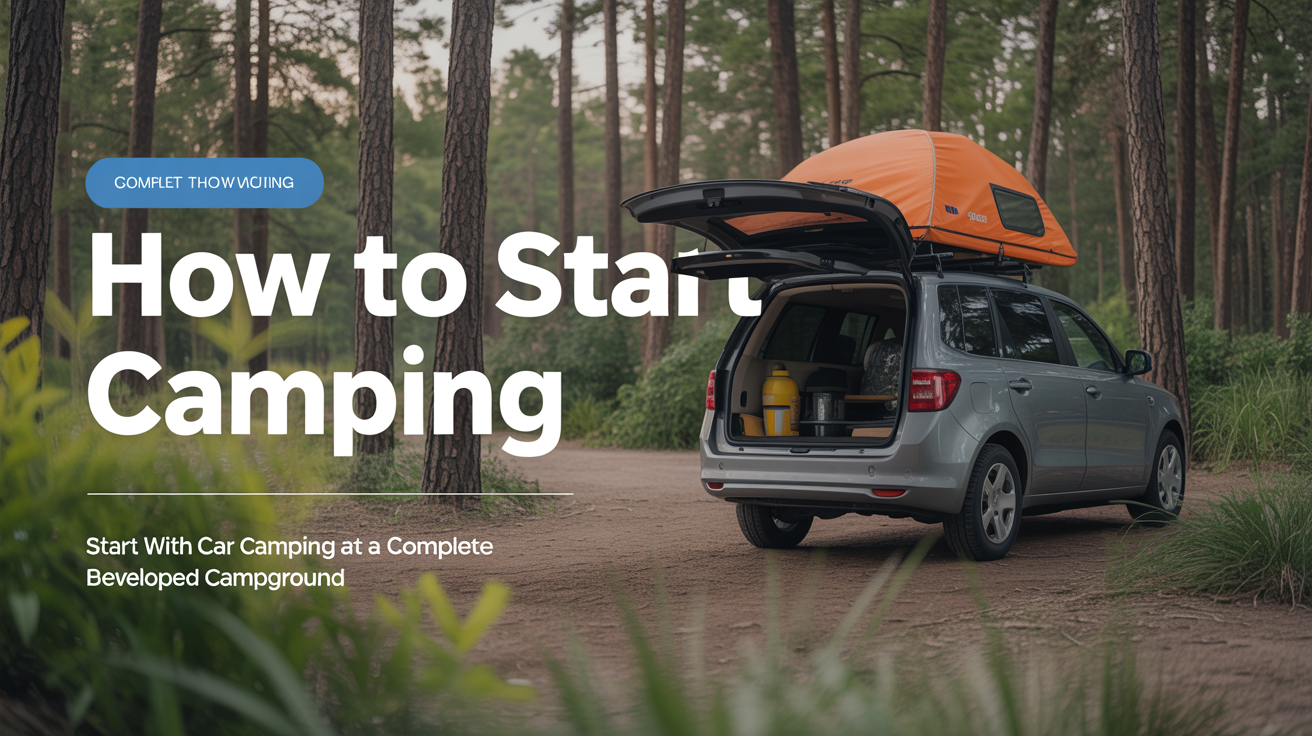
The best first camping trip is one where your car is 30 feet from your tent. Car camping at a developed campground gives you access to bathrooms, running water (usually), and a flat spot to sleep, without requiring you to carry anything on your back.
A developed campground is one managed by a park system, whether federal (National Forests, Army Corps of Engineers, state parks) or private (KOA and similar). They charge a nightly fee, offer reservable sites, and usually have fire rings and picnic tables at each site. The National Park Service's camping resources are built around exactly this on-ramp: guidance for first-time campers on where to begin, how to choose between a tent and an RV, and how to set up a campsite the first time without guesswork.
Pick a campground within two hours of home. If something goes wrong, weather, forgotten gear, a sleepless night, you can cut the trip short without it being a disaster. Once you've done it once, going farther feels a lot less risky.
For help choosing the type of setup that fits your situation, tent, cabin, or RV: types of camping explained for beginners breaks down the options clearly.
How to Find and Book a Campsite
Most public campgrounds in the U.S. can be booked through Recreation.gov, the federal reservation platform covering national forests, national parks, Army Corps of Engineers lakes, and other public land agencies. State parks use their own portals (search "[your state] state parks camping reservation"). Private campgrounds often have their own websites or list on Hipcamp.
A few things to check before you book:
- Site type: Look for sites labeled "standard" or "basic." Avoid "primitive" or "backcountry" for your first trip.
- Amenities: Confirm whether there are flush toilets or vault toilets, and whether potable water is on-site.
- Hookups: Unless you're in an RV, you don't need electrical or water hookups. They cost more and fill faster.
- Cancellation policy: Most sites let you cancel 3-7 days out for a partial refund. Read it before you pay.
Popular campgrounds, especially near cities, book weeks or months ahead in summer. If your first choice is unavailable, search weeknights or shoulder season dates (May, September, early October). Fewer crowds and cooler daytime temps are often a bonus.
More detail on the booking process lives in how to find and book a campsite.
What Gear Do You Actually Need
This is where most beginners get stuck, either by buying too much too soon or by assuming they need expedition-level equipment for a weekend at a campground. You don't.
The smart move for a first trip is to borrow or rent before you buy. REI rents tents, sleeping bags, and pads at reasonable daily rates. Friends who camp are usually happy to lend gear. Once you've slept in a tent a few times, you'll know what actually matters to you.
Here's a starter checklist organized by priority:
Must-Have Gear
| Item | Buy / Borrow / Rent | Rough Cost (if buying) |
|---|---|---|
| Tent (2-person minimum) | Borrow or rent first | $80-$250 |
| Sleeping bag (rated to 20°F) | Borrow or rent first | $60-$200 |
| Sleeping pad | Borrow or rent first | $30-$120 |
| Headlamp + extra batteries | Buy | $15-$35 |
| Camp stove + fuel canister | Borrow first | $40-$80 |
| Lighter or matches | Buy | $2-$5 |
| Water bottles or hydration system | Buy | $10-$35 |
| First aid kit | Buy | $15-$30 |
| Knife or multi-tool | Buy | $20-$60 |
Clothing and Personal Items
- Moisture-wicking base layers (even in summer, nights get cold)
- Fleece or insulating mid-layer
- Rain jacket (always, regardless of forecast)
- Sturdy closed-toe shoes; camp sandals optional
- Wool or synthetic socks (cotton holds moisture)
- Sun protection: hat, sunscreen, sunglasses
- Toiletries, biodegradable soap, toilet paper, trowel
Camp Kitchen Basics
- Pot and pan (a basic kit costs $20-$40)
- Utensils: spoon, spatula, mug
- Plates or bowls (lightweight ones, not your ceramic dishes)
- Cutting board and knife
- Cooler with ice or ice packs
- Trash bags (you'll need them)
- Dish soap and a small scrub brush
You don't need a cast iron skillet, a camp chef's setup, or a specialized coffee system for trip one. A stove, a pot, and a cooler will cover almost any meal you plan.
A Simple Two-Week Prep Timeline
Spreading prep out avoids the last-minute scramble that turns "excited about camping" into "stressed about camping."
| When | What to Do |
|---|---|
| 2 weeks before | Book the site; confirm cancellation policy; check what gear you're borrowing vs. buying |
| 1 week before | Reserve or borrow gear; test the tent and stove once at home if unfamiliar |
| 2-3 days before | Check the forecast; plan meals; buy non-perishable food and ice packs |
| The day before | Pack the car; charge headlamps and phones; pre-chill the cooler overnight |
| Departure day | Load ice and perishables last; confirm quiet hours and site rules on arrival |
Planning Your Camp Food
Camp cooking has a high margin for error, and that's a good thing. Even mediocre camp food tastes better outside.
For a two-night trip, keep it simple:
Night 1: Something that travels well and doesn't require much prep, burgers, hot dogs, or pre-marinated chicken over the fire grill. Add pre-washed salad and bread.
Morning: Scrambled eggs and toast (a pan and a stove handle this fine), or oatmeal if you want minimal cleanup.
Night 2: Foil packet meals (vegetables, protein, olive oil, seasoning, seal in foil, cook over coals for 20 minutes) are nearly foolproof and require zero cleanup.
Snacks and lunch: Trail mix, crackers and peanut butter, fruit, sandwiches. Pack more than you think you need. You'll be hungrier than usual.
A few practical notes:
- Keep your cooler in the shade and avoid opening it constantly.
- Store food according to campground rules. Many require a bear box or keeping food in your locked car; the U.S. Forest Service is direct about this one, instructing campers not to leave food, garbage, coolers, or cooking equipment out in the open, since it draws wildlife into a habit that makes the campground worse for the next visitor too.
- Bring a headlamp even for camp kitchen tasks. Night falls fast, and cooking in the dark without one is frustrating.
What to Expect on Your First Night
The first night camping is the one most beginners worry about, and it's usually the one that ends up being fine. Here's what a typical evening looks like.
You arrive, ideally before dark, and spend 20-30 minutes setting up camp. Tent first. If you've never assembled your tent before, do a practice run at home, there's no shame in that, and it prevents a genuinely annoying experience in fading light.
Once camp is set, you cook or eat something you prepped, get the fire going (if fires are allowed, check your campground's rules, especially in dry conditions), and settle in. The noise is different from home. It's not quieter, exactly; it's different. Frogs, wind, other campers a few sites over. Most people sleep fine. Some don't sleep great the first night and feel totally normal by morning. Both outcomes are common.
In the morning, you'll be hungrier than usual, the coffee will taste good, and the day will open up in a way that's hard to explain until you've experienced it.
A detailed walkthrough of the full trip arc, from packing the car to heading home, is in your first camping trip: a step-by-step plan.
Leave No Trace: The Short Version
Leave No Trace (LNT) is a set of seven principles for minimizing your impact outdoors. You don't need to memorize the full framework for a campground trip, but a few habits matter.
Pack it in, pack it out. Everything you bring, you take home. No exceptions, including food scraps.
Stick to established areas. Camp on the site you booked, use the fire ring provided, and walk on existing trails.
Respect fire rules. If a fire ban is in place, it's in place for a reason. Use your stove for cooking. If fires are allowed, keep them small and never leave one unattended. Fully drown it with water before sleeping, the ashes should be cold to the touch.
Give wildlife space. This includes not feeding animals, even "harmless" ones. A fed squirrel becomes a food-aggressive squirrel that bothers the next 50 campers.
Be considerate of other visitors. Quiet hours at most campgrounds are 10 p.m. to 6 a.m. Follow them.
Frequently Asked Questions
How much does a first camping trip cost?
If you borrow or rent gear, a two-night car camping trip can cost as little as $40-$80 total: campsite fees ($25-$45/night at most developed campgrounds) plus food. If you buy basic gear new, budget $200-$400 for a solid starter kit that will last years.
Do I need a reservation, or can I just show up?
Most popular campgrounds require reservations, especially on weekends between May and September. Some first-come, first-served sites exist, but counting on them for your first trip is risky. Book ahead whenever possible.
What if it rains?
Rain is manageable with the right mindset and a decent rain jacket. A good tent with a rainfly will keep you dry inside. The bigger issue is mud and wet gear in the morning. Pack a tarp if you want a dry outdoor space to sit under. And bring dry bags or zip-locks to protect anything that can't get wet (electronics, spare clothes, sleeping bag if yours is down).
Is camping safe for solo beginners?
Car camping at a developed campground is one of the safer outdoor activities you can do. Tell someone where you're going and when you plan to return. Keep your valuables locked in your car. Stay aware of fire rules and weather. Backcountry solo camping requires more skills and planning, save that for after you have a few car camping trips under your belt.
What's the best time of year to start camping?
Late spring (May) and early fall (September-October) are ideal for beginners. Temperatures are moderate, crowds are smaller than peak summer, and insects are usually less intense than midsummer. Summer works fine too, just book early and expect company.
Should my first trip be a tent site, a cabin, or an RV?
A tent at a developed site is the cheapest and most available option, and it teaches you the core skills (setup, cooking, sleeping outdoors) that carry over to every other kind of camping. A cabin removes the tent step entirely and suits people who are unsure whether they'll enjoy sleeping outdoors at all. An RV is the highest up-front commitment and usually isn't worth renting just to test the waters. If in doubt, start with a tent; it's the cheapest way to find out what you actually like.
What if I try camping once and don't enjoy it?
That happens, and it's useful information either way. Before writing it off, consider whether the specific trip was the problem rather than camping itself: a bad weather window, a site with no shade, or gear that didn't fit your budget can all sour a first attempt. A second trip with a better site, better weather, or borrowed gear that actually works often changes the verdict. If it still isn't for you after a fair second try, that's a reasonable conclusion too.