Safety & Navigation
The Ten Essentials Every Hiker Should Carry
Learn the ten essentials hiking system with beginner examples, a quick checklist, and tips on what each item actually does for your safety on trail.
Every hiker who spends time outdoors eventually encounters a situation that turns a normal afternoon into a problem: a sprained ankle a mile from the trailhead, a sudden storm on an exposed ridge, or simply getting turned around as light fades. The ten essentials hiking framework exists for exactly those moments. It's a short list of systems that give you realistic options when things go sideways, and carrying them doesn't require a heavy pack or expensive gear.
At a Glance
- It's a system, not a shopping list. Each of the ten covers a need; how you meet that need is flexible.
- Illumination is the most commonly forgotten item. Bring a headlamp even on a short day hike.
- Emergency shelter is the most commonly skipped. A two-ounce mylar blanket covers the minimum.
- A lean kit weighs under two pounds including water, so weight is not a real excuse to skip items.
- Tell someone your plan before you go. It costs nothing and gives rescuers a starting point.
- Scale the kit to the trip, not to a generic list; a short signed trail needs less than a remote route.
What Are the Ten Essentials?
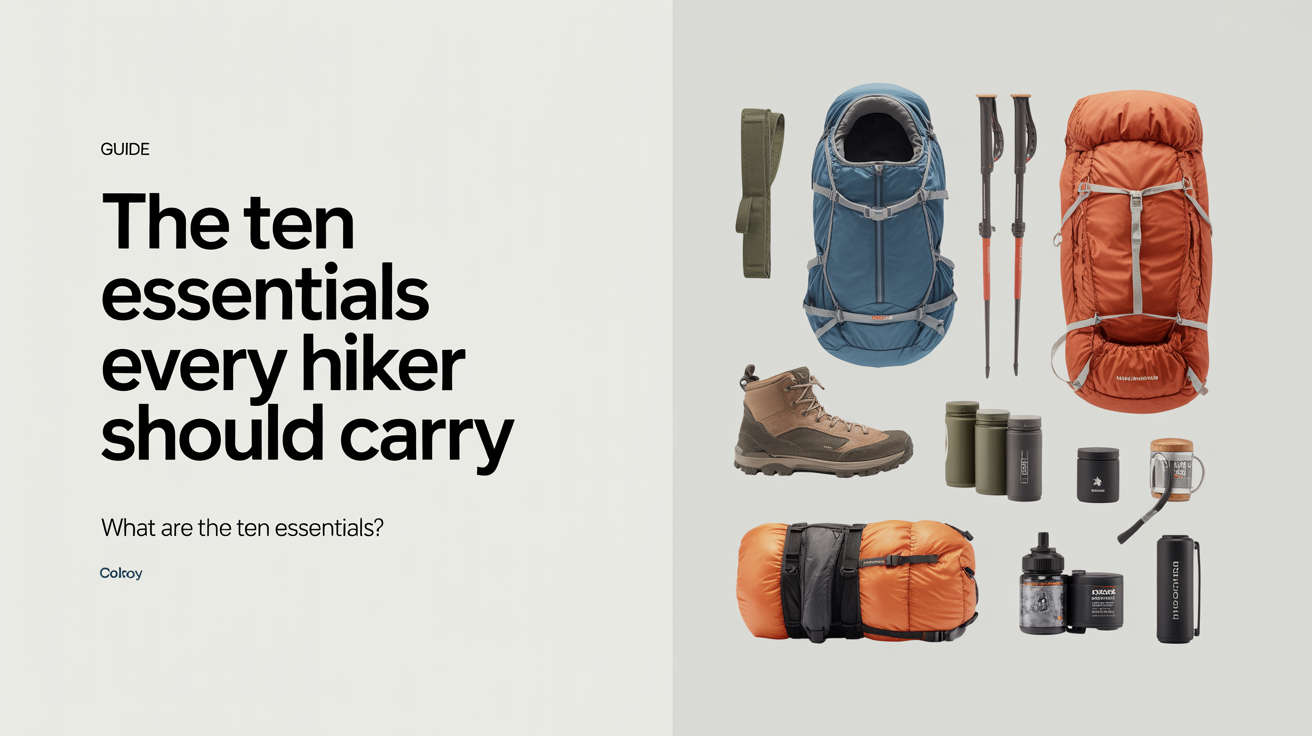
The concept has been around for decades and has evolved from a literal list of items into a system-based approach. Instead of "bring a map," the thinking is: bring whatever you need to handle navigation in your environment. That flexibility matters because a solo day hike on a heavily signed trail has different needs than a backcountry trip in an unmarked wilderness area.
Here are the ten essential systems with beginner-practical examples for each:
| System | What it covers | Beginner example |
|---|---|---|
| Navigation | Finding your way and knowing where you are | Downloaded offline map + compass |
| Sun protection | Preventing sunburn and eye damage | SPF 30+ sunscreen, sunglasses, hat |
| Insulation | Staying warm if plans change | Packable down jacket or puffy layer |
| Illumination | Seeing in the dark | Headlamp with fresh batteries |
| First aid | Treating minor injuries and buying time | Pre-made day-hike kit |
| Fire | Emergency warmth and signaling | Lighter + waterproof matches |
| Repair tools and knife | Fixing gear, cutting rope, utility tasks | Multi-tool or folding knife |
| Nutrition | Extra food beyond what you plan to eat | One extra day's worth of snacks |
| Hydration | Safe drinking water | Filled water bottle + filter or tabs |
| Emergency shelter | Surviving an unplanned night out | Lightweight bivy or emergency blanket |
If you're just getting started, this table doubles as your packing checklist before any hike. Pull it up, run through it, go.
Breaking Down Each System
Navigation is the most skill-dependent item on the list. A phone with an offline map loaded is a solid starting point for beginners, and it's genuinely useful. The catch is that phones die, screens crack, and cell service disappears. A physical map of the area and a baseplate compass give you a backup that doesn't need charging. You don't have to be an expert on day one, but knowing how to orient a map to the terrain is a skill worth building early. Two guides that help: how to navigate with a map and compass and how to use your phone for hiking navigation.
Sun protection feels like common sense until you're three hours into a high-elevation hike and realize you forgot sunscreen. UV exposure increases at altitude, reflects off snow and water, and sneaks up on overcast days. Pack a small tube of SPF 30 minimum, a hat with a brim, and sunglasses rated for UV protection.
Insulation means more than a rain jacket. Temperatures in the mountains can drop 20 to 30 degrees between midday and late afternoon, and wet weather accelerates heat loss. A synthetic or down midlayer that packs to the size of a water bottle adds minimal weight and can be the difference between a miserable shivering halt and continuing comfortably.
Illumination is the simplest item to get right. Buy a headlamp instead of relying on your phone's flashlight, which drains your battery fast. Test it before you leave, put fresh batteries in, and toss an extra set in your pack. If you're only doing short day hikes, you might never use it, but the one time a trail takes longer than expected, you'll be glad it's there.
First aid doesn't need to be elaborate for a day hike. A pre-assembled kit from any outdoor retailer covers the basics: bandages, gauze, moleskin for blisters, pain reliever, and antihistamine. Supplement it with any personal medications you need, and if you're going into more remote terrain, consider taking a basic wilderness first aid course.
Fire is an emergency tool, not a campfire kit. A reliable lighter and a box of waterproof matches together take up almost no space. If you're ever stuck out overnight in cold or wet conditions, fire can be a literal lifesaver. Carry a small supply of tinder as well, since wet wood is hard to ignite.
Repair tools and a knife cover a surprising number of situations: cutting medical tape, trimming a blister pad, fixing a broken strap, sawing a branch out of a trail. A simple folding knife or a small multi-tool handles most of this. Add a few feet of duct tape wrapped around your water bottle and a length of cordage, and you're set.
Nutrition goes one step beyond packing lunch. The rule is to carry enough food to cover your planned hike plus one extra day, at a minimum. In practice on a day hike, this means an extra handful of trail mix, an energy bar, or a pack of nut butter. Food is fuel and morale, and running low on both makes a hard situation worse.
Hydration means water you can drink, not just water you're carrying. Giardia and other waterborne pathogens exist in backcountry water sources. A filter straw, gravity filter, or purification tablets let you refill from streams and lakes safely. For most day hikes, carry at least two liters and more in hot weather or high elevation.
Emergency shelter is the item people most often skip and most regret skipping. A mylar emergency blanket weighs two ounces and costs a few dollars. A lightweight bivy sack is heavier but far more effective. Either one can keep a wet, cold, injured hiker alive while waiting for help. For day hikers, an emergency blanket is the minimum; backpackers should carry something more substantial.
Weight and Cost Budget by Kit Level
Gear weight matters less than the habit of carrying these items consistently, but seeing the actual numbers side by side helps beginners decide where to start.
| Kit level | Approximate weight | Approximate cost | Good for |
|---|---|---|---|
| Bare minimum | Under 1.5 lbs | $30–$60 | Short, well-marked day hikes near a trailhead |
| Standard day-hike kit | 2–3 lbs | $80–$150 | Most beginner day hikes, including moderate elevation |
| Backpacking-ready kit | 3–5 lbs | $150–$300 | Overnight trips, remote or unmarked routes |
Buying everything at once isn't necessary. A first aid kit, headlamp, and emergency blanket cover the highest-risk gaps for under $40 combined; the rest can be added over a season of hikes.
When and Where These Rules Apply
The ten essentials hiking list applies across environments, not just one type of trip. A two-mile trail near a popular trailhead warrants a lighter version of this kit. A twelve-mile route in a remote area warrants the full version plus extras. The goal is to match your gear to your actual risk, not to a generic recommendation.
Leave No Trace principles also shape how you carry some of these items. Fire, for example, should only be used in established fire rings or where regulations permit open fires. The National Park Service's guidance on Leave No Trace treats fire impact as one of its core principles precisely because uncontrolled or out-of-season fires cause a disproportionate share of backcountry damage. In many high-use or fire-prone areas, this means your fire kit stays in your pack unless there's a genuine emergency. Always check local regulations before your trip.
What to Do If Something Goes Wrong
Carrying these systems improves your odds, but gear alone doesn't replace judgment. If you get disoriented on trail, stop moving and think before you act. Most lost hikers make their situation worse by continuing to walk in the wrong direction. Sit down, drink water, eat something, and use your navigation tools to figure out where you are before moving.
If you're genuinely lost and have cell service, call for help. If you don't have service, stay put in a visible location and use your signaling options: a whistle, a bright piece of gear laid in an open area, or a signal mirror. Three of anything (three whistle blasts, three fires, three flashes) is the universal distress signal search teams are trained to recognize. Read more about this in what to do if you get lost while hiking.
Telling someone your plans before you leave is one of the simplest safety practices there is. Write down your trailhead, your planned route, and your expected return time, and leave it with a person you trust. This step costs nothing and gives rescuers a starting point if you don't come back.
A short mental checklist covers the most common failure points on trail. Before you commit to turning back or pushing forward, ask: do I have enough daylight left at my current pace, is anyone in the group showing signs of injury or fatigue that will slow the return, and does the weather look like it's holding or turning. Answering honestly, rather than optimistically, is what the ten essentials are there to support. Gear buys you time and options; it doesn't replace the decision to use them before a small problem becomes a serious one.
Frequently Asked Questions
Do I really need all ten essentials for a short day hike?
For a well-marked trail under two miles close to a trailhead, you can pare this list down significantly. At minimum, bring water, a way to call for help, a snack, and sun protection. But the shorter a hike seems, the more likely people are to underestimate it. If there's any elevation change, remote sections, or variable weather in the forecast, carry more.
How heavy is a ten essentials kit?
It depends on what you choose for each item. A lean version built around lightweight options (emergency blanket instead of bivy, filter straw instead of gravity filter, folding knife instead of multi-tool) can weigh under two pounds including water. Gear weight matters less than the habit of carrying these items consistently.
Can I share ten essentials with a hiking partner?
For some items, yes. You can share a single first aid kit, a fire kit, or navigation tools. For others, everyone should carry their own: each person needs their own water and food. Emergency shelter is worth doubling up on too, since you may get separated.
What's the single most forgotten item on the list?
Illumination. Most day hikers assume they'll be back before dark and skip the headlamp. Then the hike takes longer than expected, the sun sets faster at altitude than it looks on the map, and a trail that was easy to follow at noon becomes genuinely difficult in the dark. The headlamp is cheap, light, and almost always unnecessary until the one time it isn't.
Where did the ten essentials come from?
The list traces back further than most people expect. According to the recorded history of the concept, it first appeared in print in the third edition of Mountaineering: The Freedom of the Hills in January 1974, compiled by mountaineers and outdoor educators as a way to codify what gear and skills keep hikers alive in emergencies. Camp Cairn is an independent outdoors resource and has no affiliation with any specific organization, but the ten essentials concept is widely taught across the outdoor education community and has proven useful across a huge range of conditions and terrain types since.
Do I need different essentials in winter than in summer?
The ten systems stay the same, but what fills each one changes. Insulation gets heavier, navigation may need to account for snow-covered trail markers, and emergency shelter becomes more critical since exposure sets in faster in the cold. Traction devices for ice, while not one of the original ten, are worth adding as an eleventh item for winter hiking on packed snow or ice.