Hiking & Trails
How to Choose Hiking Boots and Shoes
A beginner's plain-English guide to picking the right hiking footwear: boots vs trail runners, waterproofing tradeoffs, fit tips, and break-in basics.
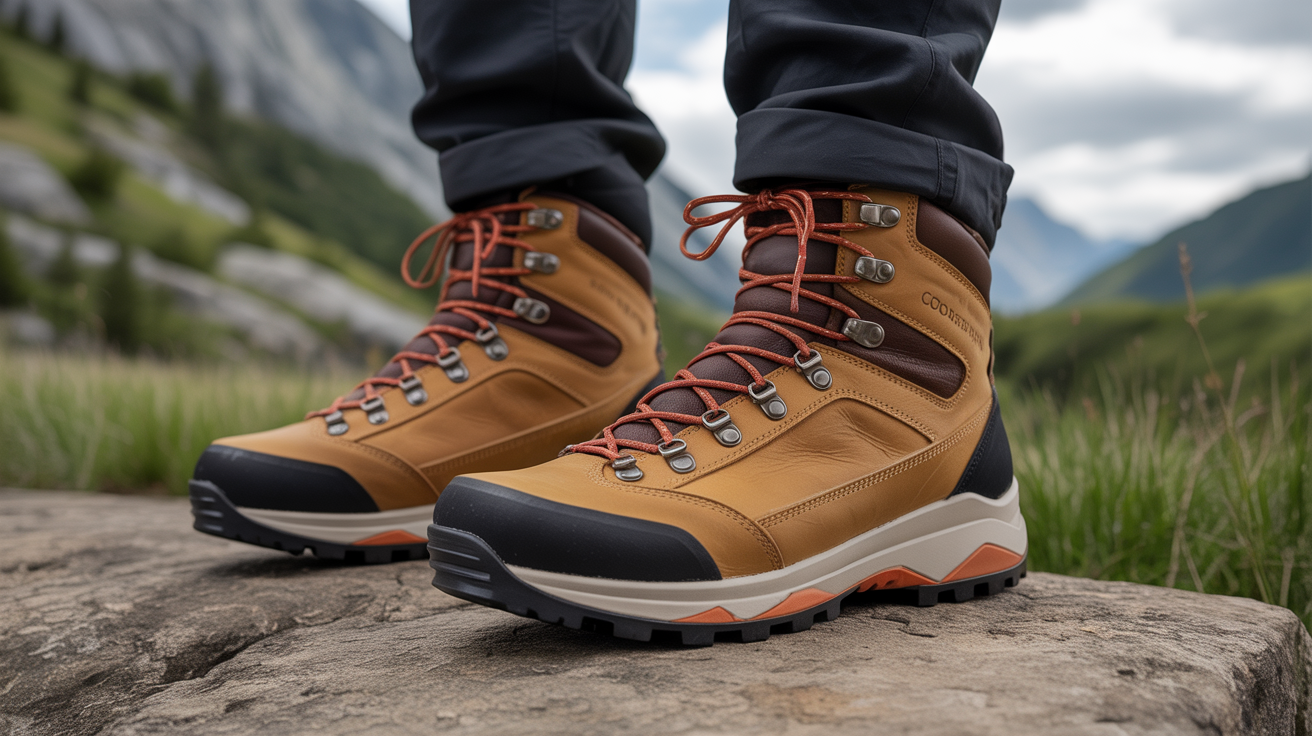
Your feet determine whether a hike is enjoyable or miserable. Spend more time on footwear than on any other gear decision, because a blister or a twisted ankle on mile two ruins the whole day. The good news: you don't need the most expensive pair on the shelf. You need the right type for where you're going, and a fit that actually works for your foot.
If you're new to trails, start here: How to Start Hiking: A Complete Beginner's Guide.
The Three Main Types of Hiking Footwear
Not all hiking shoes are the same category. There are three main styles, each suited to different terrain and trip lengths.
Hiking Shoes (Low-Cut)
Low-cut hiking shoes look like athletic sneakers but have stiffer midsoles and more durable outsoles. They're light, easy to break in, and work well on maintained trails with moderate terrain. Most beginners doing day hikes on well-marked paths will be happy in a solid hiking shoe.
Trail Runners
Trail runners are designed for running, but a huge number of hikers wear them as their primary footwear. They're extremely light, flexible, and breathable. They dry fast when wet. The tradeoff: less ankle support and a thinner sole, so rough or rocky terrain is more demanding on your feet.
For most day hikes on moderate trails, trail runners are a completely valid choice. Many experienced hikers and nearly all ultralight backpackers use them full-time.
Hiking Boots (Mid or High-Cut)
Traditional hiking boots rise above the ankle and offer more support and protection. They're heavier and take longer to break in, but on uneven terrain, loose rock, or when you're carrying a loaded pack, the ankle structure provides real stability. For multi-day backpacking trips or off-trail hiking, boots earn their weight.
Footwear Comparison Table
| Type | Best Terrain / Use | Key Tradeoffs |
|---|---|---|
| Low-cut hiking shoe | Maintained trails, day hikes, light packs | Less ankle support; lighter and faster |
| Trail runner | Moderate trails, day hikes, ultralight backpacking | Very light and fast-drying; minimal protection on rough terrain |
| Mid-cut hiking boot | Mixed terrain, heavier packs, moderate backpacking | Good support; heavier, longer break-in |
| High-cut hiking boot | Off-trail, loose rock, multi-day trips | Maximum protection; heaviest, hottest |
When Ankle Support Actually Matters
Ankle support is real, but it's often oversold to beginners. A boot doesn't magically prevent sprains. Strong ankles (built through regular hiking and basic exercise) matter more than boot height.
That said, ankle support is worth prioritizing in specific situations:
- You're carrying a heavy pack. Extra load shifts your center of gravity. A mid or high-cut boot helps stabilize you on uneven ground.
- The trail has significant loose rock or talus. A stiffer, higher boot lets you feel more secure on technical surfaces.
- You have a history of ankle injuries. If your ankles roll easily, a structured boot provides a useful external cue and some physical buffer.
For a simple day hike on a well-graded trail with a light daypack, ankle support is a secondary concern. Check the difficulty rating before you shop. Our guide on how to read trail difficulty, distance, and elevation explains what the ratings actually mean.
Waterproof vs. Breathable: The Real Tradeoff
"Waterproof hiking boot" sounds like a strict upgrade, but it's a tradeoff, not a win.
Gore-Tex and Waterproof Membranes
Waterproof hiking footwear uses a membrane (Gore-Tex is the most common brand name) that blocks water from entering the boot. This is useful in cold, wet conditions: stream crossings in early spring, muddy fall trails, light snow.
The catch: the same membrane that keeps water out also slows moisture from escaping. Your feet sweat. In warm weather or on long climbs, waterproof boots can leave your feet wet from the inside, which is uncomfortable and still causes blisters.
Non-Waterproof (Breathable) Footwear
Non-waterproof trail runners and hiking shoes breathe much better. In dry conditions or summer heat, your feet stay cooler and drier. If you do step in a puddle, the shoe gets wet, but it also dries fast (especially with trail runners).
The practical guide:
- Hot weather, dry trails, summer day hikes: skip waterproofing
- Cold weather, rain-heavy seasons, muddy trails: waterproof membranes earn their place
- Deep stream crossings: waterproof boots fill up over the collar anyway; gaiters or wet-wading shoes work better
Getting the Fit Right
This is the most important section. A technically excellent boot in the wrong size will ruin your hike.
Size Up (But How Much)
Your feet swell during exercise. On a long downhill, your toes will slam into the front of a too-short boot, which bruises toenails and causes black toenails that take months to heal. Most hikers go up half a size, sometimes a full size, from their street shoe.
The test: with the boot laced up properly, press your thumb into the toe box. There should be about a thumb's width (roughly half an inch) between your longest toe and the end of the boot.
Try Them Late in the Day
Feet swell throughout the day. If you try boots first thing in the morning, they may feel tight by afternoon on the trail. Shop in the late afternoon or evening, or walk around your house in the morning before shopping and check again.
Bring the Right Socks
Always try hiking footwear with hiking socks, not thin dress socks. Hiking socks are thicker and cushioned in different zones. A boot that feels fine with a thin sock may pinch with proper socks. Merino wool socks are a solid all-around choice (less odor, good temperature regulation).
Check heel slip: lace the boots properly and walk. A small amount of heel slip is fine with a new boot. Excessive slip (the heel lifting more than a few millimeters) means the boot is too big or the wrong shape for your foot.
Width Matters Too
Foot width varies a lot. Many brands offer wide sizes (labeled W or 2E). If your feet feel squeezed at the widest part of the shoe (the ball of the foot), try a wide option before giving up on that model. Different brands also fit differently; a size 10 in one brand may fit more like a 9.5 in another.
See what to bring on a day hike for the rest of your gear checklist.
Breaking In Your Footwear Before a Big Hike
Trail runners and lightweight hiking shoes have minimal break-in time. You can often wear them straight out of the box on a shorter hike. Traditional leather or heavy synthetic boots are a different story.
A stiff boot needs to flex and conform to your foot. Skip this step and you'll have hot spots and blisters on your first real hike. The process is simple:
- Wear them around the house. Put them on while doing chores for an hour or two per day for the first week.
- Walk on pavement or easy trails. A few short walks on hard surfaces helps the boot flex without the stakes of a full trail.
- Gradually add distance. Do a couple of shorter hikes before trusting the boots on a long trip.
If a spot rubs consistently after several wear sessions, that's a fit problem, not a break-in problem. Moleskin can address a single hot spot temporarily, but a boot that chronically rubs in the same place probably doesn't fit your foot well.
One good test before a major hike: do a two- to three-mile hike in the new boots and check for hot spots. If nothing rubs, you're ready to go longer.
Frequently Asked Questions
Do I need waterproof hiking boots as a beginner?
Not necessarily. Waterproof boots are worth it in wet climates or cold-weather hiking, but in dry conditions they'll just make your feet hot. A non-waterproof hiking shoe or trail runner works well for summer day hikes. If you hike in the Pacific Northwest or during rainy seasons, waterproof footwear earns its place.
Are trail runners good enough for hiking?
Yes, for most day hikes on moderate trails. Trail runners are lighter and more comfortable for many people than traditional boots. They lack ankle structure and have thinner soles, so very rough or rocky off-trail terrain is harder in them. But for well-maintained trail hiking with a light pack, they're a completely reasonable choice.
How do I know if hiking boots fit correctly?
With the boot laced properly, you should have about a thumb's width of space in front of your longest toe. The heel should sit snugly with minimal lift. No point should be pressing or rubbing on the sides. Try them with hiking socks and walk around for at least ten minutes before deciding.
Can I hike in regular sneakers?
On short, flat, well-graded trails, regular athletic shoes can work fine. The problem is grip (hiking outsoles have more traction on wet or loose surfaces), durability (trail surfaces eat through regular sneakers quickly), and support under load. If you're starting with easy trails and not carrying much weight, sneakers are fine temporarily. As you hike more, hiking-specific shoes or trail runners will serve you better.
How long do hiking boots last?
It depends on how often you hike and on what terrain. A well-made pair of hiking boots or shoes typically lasts between 500 and 1,000 miles of hiking. Light trail runners may wear faster. Signs of replacement: the outsole lugs are worn smooth, the midsole feels flat with no cushioning, or the upper is separating from the sole. Don't wait until a boot fails on the trail to replace it.